diAk-online – 19. April 2022

Mitten in der Zeit von Pessach, Ostern und Ramadan – und den ersten Anzeichen von Frühling in Europa, aber zugleich einer schwierigen Zeit, die vieles politisch verändert, laden wir zu unserem nächsten online-Termin ein:

Wir sprechen wieder am Dienstag, 19. April 2022 – 18.00 MEZ für ungefähr eine Stunde mit Ofer Zalzberg, Director of the Middle East Program at the Herbert C. Kelman Institute (Wien); zuvor war er lange Jahre als Analyst für die International Crisis Group tätig. Zur Zeit promoviert er am Trinity College Dublin. Ofer Zalzberg hat verschiedentlich in israel & palästina, etwa zur Situation am Haram/Tempelberg (1/2016) geschrieben oder zuletzt zur Frage zur Konflikttransformation (Heft 2-3/2021)
Wir wollen mit ihm über die politische Lage in Israel und um Israel herum sprechen:
Eine Regierung in der Krise, neue Gewalt zur alten Gewalt dazu, neue Allianzen, alte Fragen …
– das Gespräch wird auf Englisch geführt werden

liveuamap.com

Live UniversalAwareness Map – Israel und Palästina

EIn Zugriff auf unterschiedliche Nachrichten, visuell zugeordnet auf einer Landkarte!

Aus der Selbstdarstellung der Verantwortlichen:

„Live Universal Awareness Map (“Liveuamap”) is a leading independent global news and information site dedicated to factual reporting of a variety of important topics including conflicts, human rights issues, protests, terrorism, weapons deployment, health matters, natural disasters, and weather related stories, among others, from a vast array of sources. We are passionate about what we do and are energized by the positive impact we bring, as demonstrated by the loyalty and recommendations of our growing viewers across the globe.“.

An Impossible Promise?

Sociology of Religion in Arab Countries

Donnerstag, den 28. April, 17.00 – 18.30 Uhr

Vortrag von Florian Zemmin (Freie Universität Berlin)

Many Arab sociologists have been criticising the rather weak establishment of sociology in their countries. This concerns structural issues, especially political constraints for research and the underfunding of universities, but also theoretical issues, not least the Eurocentric formation and workings of sociology. Both structural and theoretical issues are especially pronounced when it comes to sociology of religion: to position religion as an object of sociological study faces political constraints and societal scepticism, also due to its representing a secular, supposedly particularly European perspective on religion. That being said, sociological approaches to religion in Arabic do have a longer history and feature more widely than is often assumed. This talk will provide glimpses into the history and presence of these approaches and their characteristics, addressing both structural and theoretical questions. One larger set of current debates that this talk will speak to are attempts at “decolonizing sociology” or establishing a “post-colonial sociology”. Such attempts often remain on a theoretical level and, ironically, hardly consider research in languages other than English. In turn, this talk engages sociologies of religion in Arabic also in order to arrive at more nuanced answers to the question of which aspects of sociology are more widely shared and which are specific to certain societies and academic contexts.

The event will be held via Zoom. Please register here: https://tinyurl.com/mr29m9mp


Kettenreaktion

Ruslan Suleymanov, bis vor kurzem noch leitender Nahost-Korrespondent der Nachrichtenagentur TASS in Kairo, bevor er aus Protest über die russische Politik zurücktrat, hat auf dem Online-Portal ipg-journal der Friedrich Ebert-Stiftung (FES) die Reaktionen in der arabischen Welt zusammengefaßt.

„Die arabische Welt begegnet dem Ukraine-Krieg zurückhaltend. Während man am Golf von neuen Energiepartnerschaften profitiert, droht andernorts Hunger.“

Ziel verfehlt ?!

Die Tötung von Anführern ist kein wirksames Mittel der Terrorbekämpfung. Der IS, al-Qaida und ihre Ableger nähren sich aus den Krisen weltweit.

Ein Beitrag von Mohammad Abu Rumman, Politikwissenschaftler und Direktor des Politics and Society Institute in Amman. Von 2018 bis 2019 war er Minister für Kultur und Jugend in Jordanien

Hier der Link zu IPG (IPG-Journal Newsletter / FES)

UNRWA schools in Jordan

Teacher management in refugee settings

Global sind 70,8 Millionen Menschen Vertriebene und ohne Bleibe („displaced people“); dies ist die höchste Anzahl seit dem zweiten Weltkrieg. Etwa 25,9 Millionen davon sind auf der Flucht und die Hälfte davon sind Kinder. Damit entstehen völlig neue Anforderungen an Bildung und eine Form von Bildungssystem, sowohl organisatorisch als auch inhaltlich und in der konkreten Praxis. Wie kann das Recht auf Bildung und eines der VN-Nachhaltigkeitsziele (Sustainable Development Goals, SDG) für Menschen auf der Flucht gerade in den Refugee Camps einigermaßen umgesetzt werden? Welche Erfordernisse ergeben sich daraus an die dort tätigen Lehrer und Lehrerinnen und wie kann dabei überhaupt strukturiert und geplant gearbeitet werden?

Das International Institute for Educational Plannung in der UNESCO und der Education Development Trust, finanziert von der Open Society Foundation, haben eine Studie zur Situation von Lehrplanung und Schuldbildung in den UNRWA-Schulen in Jordanien veröffentlicht.

“In fact, Goal 4 of the United Nations (UN) Sustainable Development Goals (SDGs), which seeks to ‘ensure inclusive and equitable quality education and promote lifelong learning opportunities for all’, remains far out of reach for many of the world’s refugees. According to a recent report from the International Rescue Committee (IRC), refugees are largely excluded from SDG-related data collection, monitoring frameworks, and national reporting and development plans. As of 2018, only 63% and 24% of refugees had access to primary and secondary schooling respectively. There is therefore an urgent need to improve the equitable provision of quality education that is inclusive of refugees.

Effective teacher management is a key policy lever for ensuring inclusive, equitable and quality education systems. Research has shown that the quality of the teaching workforce is the most important factor affecting student learning among those that are open to policy influence. In crisis and displacement situations, the role of teachers is particularly significant; they are the ‘key to successful inclusion’ and are sometimes the only educational resource available to students. Teachers are a source of continuity in students’ disrupted lives; they play a key role in developing their social and emotional skills and in protecting and supporting their scholastic success. However, teachers working in refugee contexts are unable to play this crucial role without appropriate support and training to be able to handle the often overcrowded, mixed-age and multilingual classrooms. Although teachers and teaching practices have received increasing attention in education in emergencies research in the last few years, most of the data available about teachers of refugees are limited to numbers of teachers, qualifications and certification, and compensation. Indeed, it is understandable that these data are cited most often in the discourse, considering that mass shortages, particularly of qualified teachers, are a significant problem ‘across displacement settings, both at the onset of crisis and in cases of protracted displacement’.

More research is needed – particularly from the perspectives of teachers in refugee settings – to identify the many challenges they face and to support the development of strategies to overcome them. Challenges include a lack of appropriate preparation to provide psychosocial support and practise self-care, uncertain career opportunities, financial and social insecurity, language barriers, gender inequality, and a lack of coordination between the many non-governmental and governmental actors involved. As more emergencies become protracted crises and refugee populations continue to grow, there is an urgent need for evidence to guide the development and implementation of policies for the effective management of teachers working with the populations affected. Such research should pay attention to the dynamics and context of the displacement crisis, focusing on teachers in refugee settings rather than teachers of refugees, as not only can the global refugee crisis change from day to day with the outbreak of new crises, including climate-related emergencies, but sometimes host communities are just as vulnerable, if not more so, than their refugee peers. In other words, research is needed that will align with the ‘whole society approach’ advocated by the international community and support planning for the society as a whole instead of planning in parallel for the host community and the refugee community” S. 11-12.

Zum Dokument

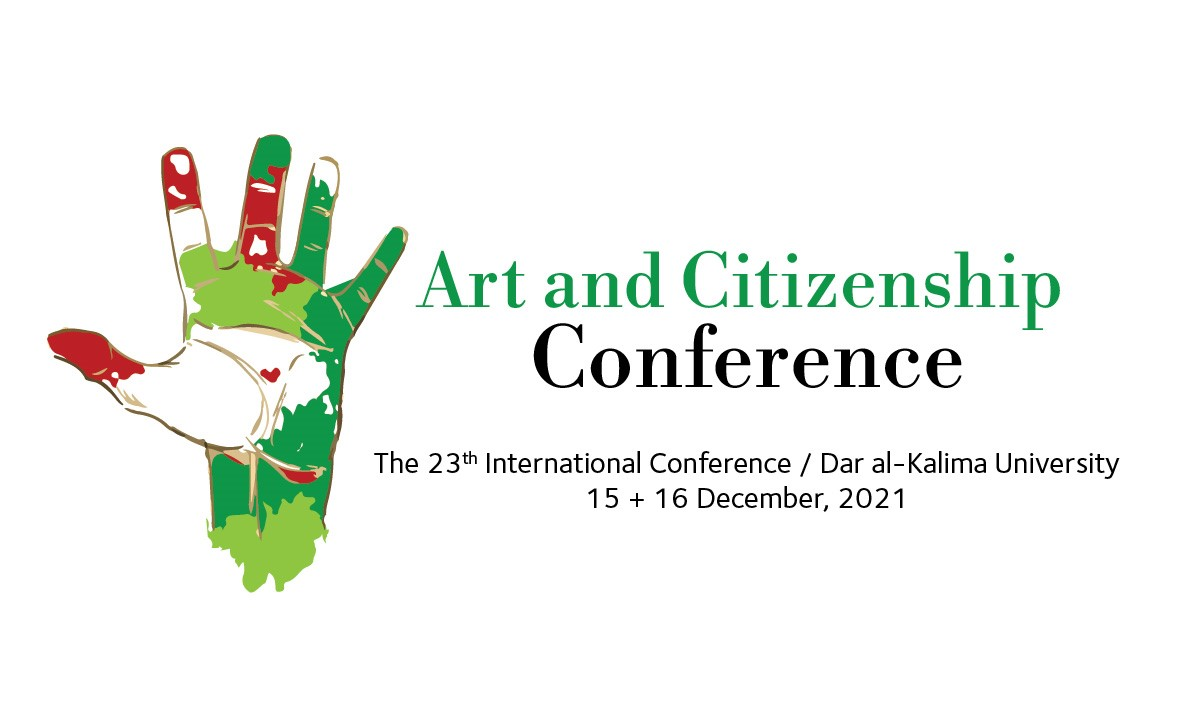
Zoom Konferenz: Art and Citizenship

Dar al-Kalima University cordially invites you to attend our 23rd International Conference entitled „Art and Citizenship“ Conference on Wednesday and Thursday, December 15th and 16th, 2021 from 10:00AM to 19:30PM via this zoom link; where you can choose between Arabic and English languages.

Simultaneously with the Conference – held in Bethlehem – and as part of the Conference, three sessions shall be held in Lebanon, Gaza, and Amman, according to the following schedule:
15.12.2021 In Amman in cooperation with the Royal Institute of Religious Studies
16.12.2021 In Gaza, at the headquarters of Dar Al-Kalima University.
16.12.2021 In Beirut: in cooperation with the Dar Al-Kalima Association for Arts and Culture.

Please note that all the times are based on Jerusalem time (GMT+2). 

To Check the Program, please click the link below:

https://www.daralkalima.edu.ps/uploads/files/Program%20in%20english.pdf


For more information or inquiries please contact: conference23@daralkalima.edu.ps

Der Truman Institut Atlas des jüdisch-arabischen Konflikts

Verfasser: Dr. Shaul Arieli

Wenn auch unter einem sehr diskussionswürdigen Titel ist am Harry S. Truman Forschungsinstitut für Frieden an der Hebräischen Universität in Jerusalem ein gelungener illustrierter Atlas erschienen, der – mit Unterstützung der Böll Stiftung (Tel Aviv) – auch frei herunterladbar ist (Englisch und Deutsch).

The Truman Institute Atlas of the Jewish–Arab Conflict

The Israeli-Palestinian conflict has already raged for a century, and will probably continue to be the chief concern of the two peoples that live in Israel/Palestine for many years to come. This atlas offers a clear and concise explanation of the development of the conflict in its various aspects, focusing particularly on territorial, demographic, and diplomatic aspects. It begins with the start of modern Jewish immigration to the country and ends at the present day.

Dozens of colored maps present a wealth of information in an accessible form, providing a clear graphic illustration of the historical course of the confl­ict. Concise accompanying texts enhance the maps and create a credible and informative historical narrative.

Zur Zukunft der Taufstelle…

Jordanien ernennt Experten-Kommission

Entwicklung zwischen religiösem Respekt, historischer Verantwortung und einem attraktiven Profil für Tourist:innen und deren Geld… Öffentliche Präsentation in Jordanien sogar in Anwesenheit des Königs.
Auch Israel will auf der palästinensischen Seite des Jordans investieren…

Jordan has announced plans to develop the site along the Jordan River – where John is believed to have baptized Jesus – into a destination for Christian pilgrims from around the world.
King Abdullah himself attended a ceremony last week to officially appoint the board which was formed last year to provide a strategic vision to develop the site. The plan includes improving the infrastructure to accommodate more pilgrims and establishing a village with hotels and hospitality, an area for religious ceremonies, as well as agricultural parks and gardens.
“The board will oversee the development of these areas, while ensuring the protection of the Baptism Site as a UNESCO World Heritage Site,” according to the Royal Hashemite website. “The advisory board groups areexperts from around the world in development, tourism, cultural heritage and hospitality, among other key fields.”

Bericht in AllArabNews | Vatikan News

Die EU unterstützt weiterhin UNRWA

Flüchtlingshilfswerk der Vereinten Nationenen

Seit 1971 unterhalten die Europäische Gemeinschaft / EU und the United Nations Relief and Works Agency for Palestine Refugees in the Near East (UNRWA) eine strategische Partnerschaft mit dem gemeinsamen Ziel,  humanitäre Entwicklungserfordernisse palästinensischer Flüchtlinge und Stabilität im Nahen Osten zu unterstützen.

Inzwischen ist die EU die größte multilaterale Unterstützerinstitution, die internationale Hilfe für mehr als 5,8 Millionen palästinensischer Flüchtlinge in Jordanien, Libanon, Syrien,  Westjordanland und Gaza leistet.

Am 17. November 2021 unterzeichneten die beiden Vertreter der EU und der UNRWA eine Gemeinsame Erklärung über die weitere Unterstützung der EU für die UNRWA für die Jahre 2021 bis 2024. Josep Borrell, EU High Representative, hob hervor, daß UNRWA in den Kernbereichen bei der Versorgung von Millionen palästinensischer Flüchtlinge eine „essential role“ spiele.

Der Text der gemeinsamen Erklärung ist hier abzurufen:

Joint Declaration between the European Union and the United Nations Relief and Works Agency for Palestine Refugees in the Near East (UNRWA) on European Union support to UNRWA (2021-2024)

***

Deutschland erhöht Unterstützung des VN-Flüchtlingshilfswerkes UNRWA

Die Bundesrepublik Deutschland wird das VN-Flüchtlingshilfswerk UNRWA mit weiteren 72 Millionen Euro unterstützen. Dies teilte Staatssekretär Miguel Berger gestern im Rahmen der virtuellen UNRWA-Konferenz in Brüssel mit. In dem Betrag sind zusätzliche 15 Millionen Euro zur Entlastung des Programmbudgets enthalten.