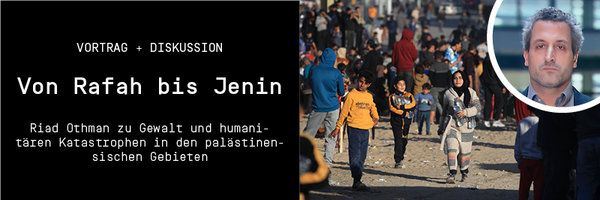
Von Rafah bis Jenin

Gewalt und humanitäre Katastrophe in den palästinensischen Gebieten

Seit dem besonders unter israelischen Zivilist*innen opferreichen Angriff der Hamas vom 7. Oktober 2023 begann ein verheerender Krieg in dem seit Jahrzehnten abgeriegelten Gaza-Streifen. Systematische Angriffe auf zivile Ziele, die Vorenthaltung humanitärer Hilfe, die gezielte Zerstörung der Lebensgrundlagen der Bevölkerung und zahlreiche Attacken gegen Gesundheitseinrichtungen gehören zu den Waffen dieses Krieges mit zigtausenden Opfern. Angesichts dieser humanitären Katastrophe bleiben die politischen Reaktionen internationaler Verbündeter Israels, wie der USA und Deutschlands, verhalten. Unterdessen eskalieren auch im Westjordanland die Vertreibung palästinensischer Gemeinden und die militärische Gewalt.

Riad Othman berichtet als Nahost-Referent von medico international über die Situation vor Ort in Gaza und der Westbank. Im Anschluß besteht die Möglichkeit Fragen zu stellen und miteinander ins Gespräch zu kommen.
Anmeldung: https://eveeno.com/324034212
Angemeldete erhalten vor dem Event per eMail einen Web-link.

Was liegt am Ende dieser Entwicklung?

Ronit Vered schreibt in der Wochenendbeilage von Haaretz über das Restaurant Majda in der Nähe von Jerusalem – und über sein Ende, vielleicht / wohl nicht das einzige, das zu Ende geht …

„On the last Saturday of June, the Majda restaurant outside Jerusalem closed its doors for the last time, 14 years after it opened. „Summer 2024, the last meal,“ a note atop that day’s menu stated. And at the bottom of the changing, seasonal menu, penned as always in Michal Baranes‘ lovely handwriting: „Majda is closing at the end of this week. Thanks to all the good people who accompanied us over all the years. In the end things will be good. Yakub and Michal.

I too came to take leave of Majda, located in the Arab village of Ein Rafa, west of the capital. From the place, from the people, from the food. On the table in the beautiful garden – a green, tangled Eden of wild, decorative and edible vegetation – the waiter placed a jug of cold water, and on the neck of a bottle of rosé, which Yaakov Barhum makes himself from the grapes of a vine he planted in the yard, beads of moisture glistened in the heat of the day. On the plate of gazpacho made from red-yellow tomatoes, the foliage of the trees played games of light and shade, flitting between ice cubes and puddles of olive oil.


„It’s very likely that the leaving tendency – or the attempt to move the center of one’s activity abroad – will only gather momentum. An end to the war is not looming on the horizon, and in contrast to previous rounds of fighting, the trauma will not make it possible to repress easily the fragmentary nature of the ability to maintain a stable, tranquil life here. The state creates difficulties for the food and restaurant industries here even in times of calm – in the form of draconian regulations, rigid kashrut laws and the high cost of living.


Living eternally by the sword and the absence of foreign tourists, an important element in the thriving of a restaurant scene, are death blows to an industry that has already found it difficult to stay afloat in recent years. It’s hard to blame those who are looking for other places in which they and their children can enjoy a life of sanity, but also where they can realize professional dreams and make an honorable living.“

Das Wort Frieden kommt nicht vor

Vortragsreihe FU Berlin online

Stabsstelle Diversity und Antidiskriminierung

„Gemeinsam gegen Antisemitismus, Rassismus und Diskriminierung auf dem Campus der Freien Universität Berlin“

Im WiSe 23/24 wurden folgende öffentliche Vorträge angeboten: 

  • 29. Januar 2024: Vortrag „Nach dem 7. Oktober: Antisemitismus, Rassismus und die deutsche Debatte“ von Meron Mendel und Saba-Nur Cheema

Im SoSe 24 wurden folgende öffentliche Vorträge angeboten: 

  • 6. Mai 2024: Vortrag „Antimuslimischer Rassismus in der Gesellschaft“ von Karim Fereidooni  
  • 5. Juni 2024: Vortrag zum Thema „Antisemitismus gegen Israel“ von Klaus Holz
  • 5. Juli 2024: Vortrag zum Thema „Is anti-Zionism antisemitic? About the weaponization of antisemitism in current debates.“ von Emilia Roig (inkl. Übertragung via Livestream)
  • 11. Juli 2024: Vortrag „Foundations for Life in Common: A Historical Perspective on Israel/Palestine“ von Gadi Algazi

Humanitäre Lage im Gaza-Streifen und weiteres

Die humanitäre Lage im Gaza-Streifen sowie die Gewalteskalation in Folge des Hamas-Terrors in Israel sind Ende März 2024 Thema der Versammlung der Interparlamentarischen Union in Genf gewesen. Das geht aus der Unterrichtung (20/11865) durch die deutsche Delegation hervor.

Unter Federführung der dänischen Delegation und mit Unterstützung diverser Mitglieder der geopolitischen Gruppe der 12 Plus, der die deutsche Delegation angehört, sei ein Dringlichkeitsantrag eingebracht worden, der einen sofortigen Waffenstillstand, umfassende humanitäre Hilfe für den Gazastreifen sowie die sofortige Freilassung aller Geiseln gefordert habe. Der Antrag habe jedoch nicht die erforderliche Zweidrittelmehrheit erreicht; auch sei der Versuch gescheitert, einen gemeinsamen Antrag mit der afrikanischen und der arabischen Gruppe zu formulieren.

„Um zu diesem wichtigen Thema nicht zu schweigen, entschied IPU-Präsidentin Tulia Ackson (Tansania) gemeinsam mit IPU-Generalsekretär Martin Chungong (Kamerun), im Namen der weltweiten parlamentarischen Gemeinschaft eine Erklärung über dringende Maßnahmen zur Bewältigung der Situation in Gaza abzugeben“, heißt es in der Unterrichtung weiter. In der Erklärung würden ein sofortiger Waffenstillstand im Gazastreifen, die sofortige und bedingungslose Freilassung aller Geiseln, die sofortige Ausweitung lebenswichtiger humanitärer Hilfslieferungen für die Betroffenen im Gazastreifen gefordert sowie jegliche Art von Gewalt gegen Zivilistinnen und Zivilisten verurteilt und appelliert, das humanitäre Völkerrecht zu achten.

Gideon Levy im Gespräch mit Hanno Hauenstein

ÖKR/WCC: Weltweite Woche des Friedens für Palästina und Israel

Pray, advocate, and stand in solidarity
with people in the Holy Land

Five New Settlements

Bericht von Peace Now über eine der aktuellen Maßnahmen der israelischen Regierung

„Based on media reports, at the cabinet meeting on Thursday, June 27, 2024, it was decided to establish five new settlements in isolated areas deep in the West Bank by legalizing five illegal outposts: Givat Assaf, Adorayim, Sde Ephraim, Evyatar, and Heletz. At this stage, the full text of the decision has not been published and the announcement about the legalization of the outposts was released to the media by Minister Smotrich’s office.“

Mit Karten und Erläuterungen

Ein (israelisches) Gedankenmodell für Gaza

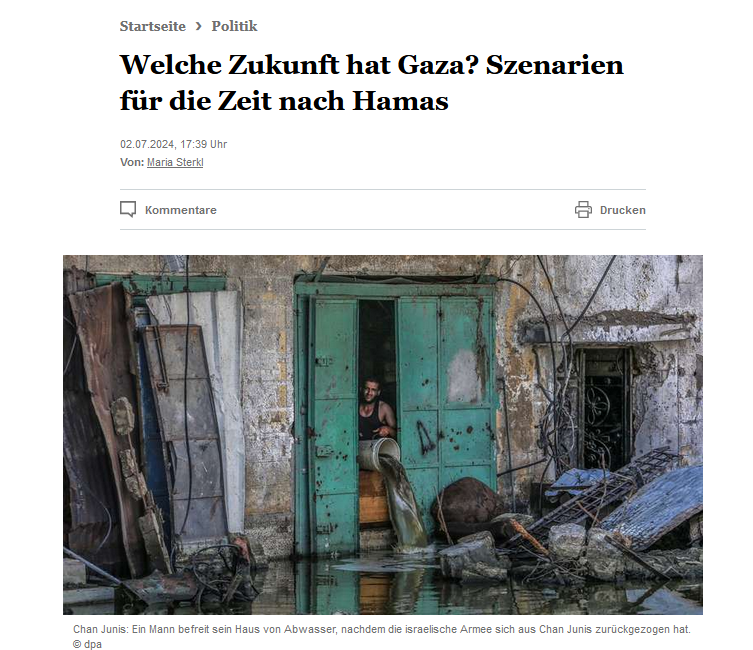
In der Frankfurter Rundschau finden sich ein Interview, daß Maria Sterkl mit der Juristin Netta Barak-Corren und dem Militärhistoriker Danny Orbach geführt hat, beide sind Autor:innen eines Stragegiepapiers, das in Israel seit einiger Zeit diskutiert wird („Von einem Mörder-Regime zu einer gemäßigten Gesellschaft: Die Transformation und Rehabilitation von Gaza in der Post-Hamas-Ära“)

Hier ein Zitat aus dem Papier, dessen Duktus israelische Interessen reflektiert und aus historischen Erfahrungen (und Fehlern) lernen will …

Separating Myth from Reality

Keine kurze Nachricht heute einmal, sondern einen relativ langen Essay von Sheryl Ono, der sehr einfühlsam und lesenswert ist … es gibt keine einfachen Antworten ..

„I am proud of my Jewish heritage. I am proud of our commitment to scholarship, the arts, and activism, of our role in the civil rights and union movements. I am proud of the young Jews speaking out on college campuses and the older ones who took over the Cannon Building in the Capitol last November. This is the culture that I know and connect with — people whose hearts are capable of aching for the Israeli hostages and the Palestinians at the same time.“