Der Vorsitzende der „Demokratischen Partei“, dem Zusammschluß aus zwei kleinen linken Oppositionsparteien in Israel, Meretz und Avoda, Jair Golanim Gespräch mit Tilman Schröter und Anja Wehler-Schöck vom Berliner Tagesspiegel. Die Partei würde laut Umfragen aktuell elf bis dreizehn der 120 Parlamentssitze in der Knesset erhalten. Die nächste Wahl soll im Herbst 2026 stattfinden. Golan wurde 1980 ins israelische Militär eingezogen und stieg dort bald auf. Er kommandierte verschiedene Einheiten und war von 2014 bis 2017 stellvertretender Generalstabschef.
Der Historiker und Autor Tom Segev über die Waffenruhe in Nahost, die Zukunft in Gaza und den Einfluß von Trump in einem FR-Gespräch mit Michael Hesse.
Standing together hat eine Petition gestartet, um den Druck zu erhöhen, umfassend zu einem Ende der Gewalt zu kommen …
A complete ceasefire deal – No less!
After more than a year of this disaster, finally we can feel some hope. Israel and Hamas have signed a deal to end the war in Gaza – this means an end to the hostilities, the return of hostages to their families, and calm after relentless bombardment for Palestinians in Gaza. Finally, we can breathe a sigh of relief and start to rebuild and recover.
Alongside this hope there is a real fear that our government will sabotage the deal before its second phase can be completed. The extremist far right is already pushing for the war to resume after the first phase: Smotrich is talking about guarantees he received from Netanyahu about the future of Gaza and Ben-Gvir has said he will return to the government only after fighting resumes. For them, the release of just 33 hostages is enough, and the ceasefire can collapse after 42 days.
We are demanding no less than a complete deal. We will not accept a situation in which the government ignores the will of the majority and drags us back toward the abyss. We refuse the continuation of the brutal war in Gaza and the abandonment of the hostages on the altar of messianic ideas of occupation and settlement.
The immense public pressure we exerted on the government was crucial to reaching this ceasefire and hostage deal. Now we have 42 days to demand that the deal continue to its second phase. We have 42 days to fight for our future here. Raise a global voice and help us demand a complete end to the war. No less.
In der Zeit der Wartens auf den Beginn des Waffenstillstandes und all dessen, was da kommen soll, ein kleiner Ausschnitt aus der Berichterstattung von Haaretz:
„The hollow expression coined by Trump, „all hell will break out“ – without indicating what hell and who will walk through its gates – is the factor that turned the magic key needed to compel Netanyahu to agree to a deal that Biden laid on his desk many months ago. Could Biden have opened the gates of hell himself at an earlier stage? No commission of inquiry will be established in the U.S. to examine all the administration’s failures regarding the handling of the war in Gaza, but it appears that both administrations, Biden’s and Trump’s, can already draw a clear conclusion: Israel only understands force.
Der ganze Artikel ist hinter der Bezahlschranke von Haaretz.
Ein „Kalenderblatt“ des dlf von Matthias Bertsch mit Drin. Angelika Timm
„Vor 40 Jahren flog Israel Tausende äthiopische Juden aus dem Sudan aus. Die eigentlich als geheim geplante Aktion wurde öffentlich und erregte Aufsehen. Dennoch machte Israel weiter: So konnten bis zum 5. Januar 1985 viele Menschen gerettet werden.“
Militärische Auseinandersetzungen gehen nie „nur“ um Identität, oder um Würde, nicht einmal nur um Rache oder Vergeltung, immer spielt Geld eine zentrale Rolle – und wer noch mehr davon haben will.
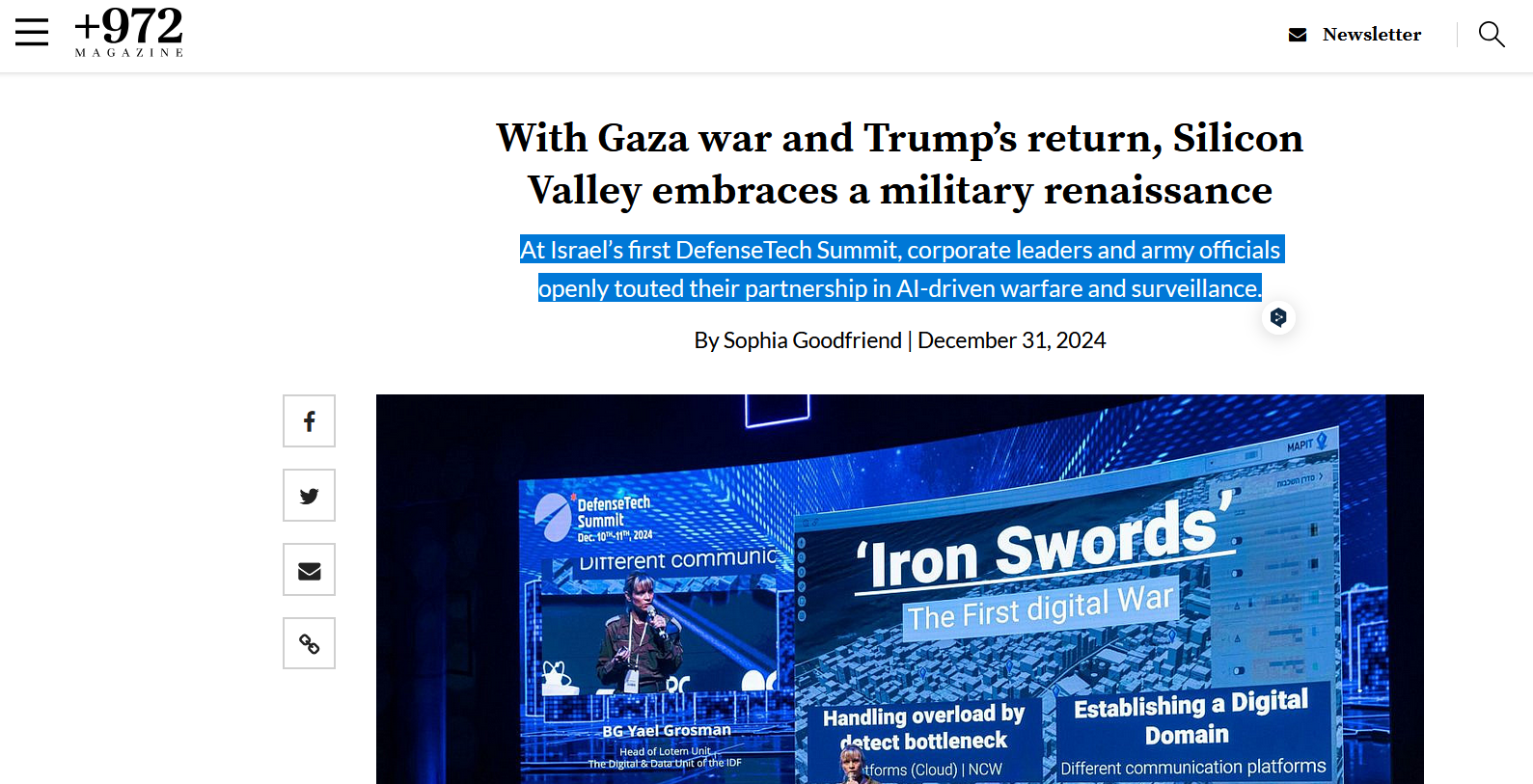
Ein Bericht von Sophia Goodfriend auf der Plattform +972 über eine entsprechende Konferenz in Tel Aviv:
At Israel’s first DefenseTech Summit, corporate leaders and army officials openly touted their partnership in AI-driven warfare and surveillance.
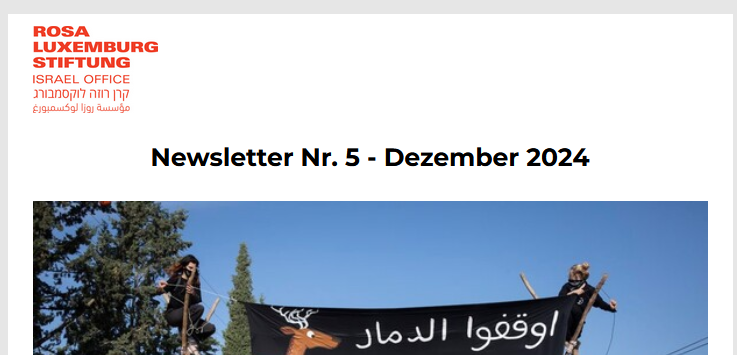
Rosa-Luxemburg-Stiftung Tel Aviv | Aktuelle Beiträge:
„Zu unserer Artikelserie über Militarismus und Militarisierung in Israel, die im nächsten Jahr in gedruckter Form erscheinen wird, sind zwei weitere Beiträge hinzugekommen: die Gastaktivistin Ya’ara Peretz beschreibt wie die Umweltbewegung in Israel mit dem Thema Krieg hadert – oft aus Angst ums Überleben in einer politischen Atmosphäre, die soziale und ökologische Fragen als Randthemen abtut. Und die Historikerin Idith Zertal fasst die Geschichte der israelischen Wehrdienstverweigerung aus Gewissensgründen zusammen, und fragt sich und uns, wo die Grenze zwischen Pflicht und Gewissen liegt.“