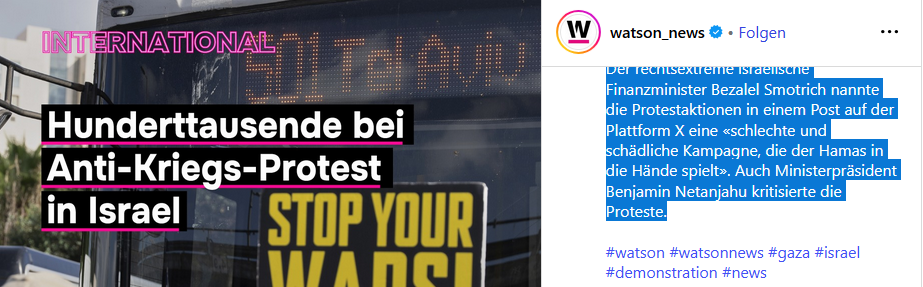
Hunderttausende Demonstrantinnen und Demonstranten haben sich in Tel Aviv und Jersualem versammelt; es handelt sich um eine der grössten Demonstrationen in Israel seit dem Wiederaufflammen des Krieges im Oktober 2023.
Die Demonstranten forderten die Beendigung des Gaza-Kriegs und die sofortige Freilassung der Hamas-Geiseln. Zudem riefen sie die israelische Regierung dazu auf, ihre Entscheidung rückgängig zu machen, die Stadt Gaza und andere Gebiete im Gazastreifen einzunehmen. Sie blockierten zahlreiche Strassen im Land, darunter auch eine zentrale Schnellstrasse in der Küstenmetropole Tel Aviv.
Mehr als 30 Menschen wurden nach Angaben der Polizei festgenommen. In Jerusalem wurden Wasserwerfer gegen Demonstranten eingesetzt. Die Organisation der Geiselangehörigen hatte für Sonntag – den Beginn der israelischen Arbeitswoche – zu einem landesweiten Streik aufgerufen. Man werde «das Land zum Stillstand bringen», sagte Einav Zangauker am Samstagabend bei einer Kundgebung – ihr Sohn Matan ist eine von 20 lebenden Geiseln im Gazastreifen. Der mächtige Gewerkschafts-Dachverband Histadrut schloss sich dem Streik zwar nicht an, äusserte aber Verständnis für den Schritt.
Der rechtsextreme israelische Finanzminister Bezalel Smotrich nannte die Protestaktionen in einem Post auf der Plattform X eine «schlechte und schädliche Kampagne, die der Hamas in die Hände spielt». Auch Ministerpräsident Benjamin Netanjahu kritisierte die Proteste.
Bei einer Demonstration in der israelischen Küstenmetropole Tel Aviv haben zahlreiche Menschen ihre Solidarität mit den Geiseln zum Ausdruck gebracht, die seit fast zwei Jahren von der Hamas im Gazastreifen festgehalten werden.
Die Macht des Wortes: die Wahrheit sagen, Gerechtigkeit einfordern
Liebe Freundinnen und Freunde,
aus unseren Terminologie-Workshops wissen wir, wie tiefgreifend unsere Wortwahl bei der Beschreibung von Konflikten Menschen beeinflusst. Ob wir etwas Genozid, ethnische Säuberung oder Kriegsverbrechen nennen, solche Bezeichnungen sind nicht nur semantisch – sie haben schwerwiegende politische und emotionale Bedeutungen auf der ganzen Welt. Wir wollten verstehen, warum das so wichtig ist. Und nun wissen wir, dass eine Situation zu bezeichnen einen Wunsch widerspiegelt: den Wunsch nach Anerkennung, nach Wandel, nach Verantwortlichkeit, nach internationaler Verantwortung. Menschen beschreiben mit Begriffen nicht nur, was geschieht, sondern sie pochen zugleich darauf, dass etwas geschehen muss – dass Gerechtigkeit geschaffen werden muss. Wir sehen, dass überall auf der Welt Menschen glauben, sich „für eine Seite entscheiden“ zu sollen – dass sie sich nur mit einer Seite solidarisieren und sich gegen die andere stellen sollen. Doch uns, deren Arbeit im jüdisch-palästinensischen Dialog verwurzelt ist, aus der wir Stärke gewinnen, ist klar, dass die Realität so zu sehen, wie sie ist – eben nicht bedeutet, einseitig Partei zu ergreifen. Rechenschaft für Kriegsverbrechen oder Verbrechen gegen die Menschlichkeit einzufordern ist nicht Ausdruck einer Feindseligkeit gegenüber einem Volk – es ist ein Grundsatz, der die Menschenrechte und moralische Klarheit unterstützt. Beim Streben nach Gerechtigkeit geht es nicht um Spaltung; es geht um die Verteidigung universeller Werte und um die Anerkennung aller Menschen, die von Gewalt und Unterdrückung betroffen sind. Darin liegt für uns die ethische Verpflichtung beider Seiten: Leben zu retten, Gerechtigkeit zu schaffen und Heilung für die Opfer zu ermöglichen; und einen Pfad der Rechenschaftslegung und der Transformation für die Täter zu eröffnen – sodass alle in Würde und Hoffnung weitergehen können.
Die entsetzlichen Berichte aus Gaza zerreißen das Herz und sind unstrittig. Der Hunger und die Vernichtung – von Leben, Häusern und ganzen Gemeinschaften – müssen sofort aufhören. Die 1948 vertriebenen/geflüchteten Palästinenser werden vom Staat systematisch zum Schweigen gebracht und ein Klima geschaffen, das viele lähmt und ihnen die Sprache verschlägt; zugleich fühlen sie sich schuldig, während sie die Auslöschung und Zerstörung ihres Volkes und ihre eigene Ohnmacht erleben. Mittlerweile unterstützen jüdische Israelis entweder aktiv die fortdauernde Gewalt, oder ziehen Verleugnung oder Vermeidung vor, anstatt sich der Realität und ihrer Rolle darin zu stellen. In den vergangenen Wochen, im Angesicht des schrecklichen Hungers, sind wir Zeugen starken Widerstands aus beiden Gruppen geworden – und doch ist dies angesichts des Ausmaßes der Grausamkeiten traurigerweise nicht genug.
Wir rufen jeden Einzelnen von Euch auf: Tut alles, was Euch möglich ist, um diese Grausamkeiten zu beenden und Leben zu retten!
Wenn Ihr nicht wisst, wie, helfen wir Euch gern, darüber nachzudenken, wie Eure Resourcen – Eure Stimme, Eure Zeit, Eure Netzwerke, Eure Geldmittel – etwas bewirken können.
In diesem Brief findet Ihr eine Übersicht über unsere Aktivitäten auch unter diesen unerträglichen Bedingungen, aufrechterhalten durch die Hoffnung und die Überzeugung, dass ein anderer Weg sowohl möglich als auch notwendig ist.
Mit freundlichen Grüßen – Roi Silberberg, Direktor, School for Peace
Gut investiertes Geld der Deutschen Forschungsgemeinschaft (DFG):Die postnazistische Gesellschaft
Goethe-Universität Frankfurt am Main | 19. August 2025
Zu Beginn der 1950er Jahre startete das Institut für Sozialforschung (IfS) eine der aufwendigsten empirischen Studien der deutschen Soziologie: Ziel war es, zu erfahren, inwiefern der Nationalsozialismus seinen Zusammenbruch überdauert hatte. Wie stark waren damals demokratische Einstellungen, wie verbreitet Rassismus und Antisemitismus? Die Ergebnisse blieben nach der Studie weitgehend unveröffentlicht, zu brisant erschienen manche Einblicke. Nun sollen sie erstmals in ihrer Gänze öffentlich gemacht und erforscht werden. Dazu stellt die Deutsche Forschungsgemeinschaft (DFG) zunächst für drei Jahre 1,3 Millionen Euro zur Verfügung.
Das „Gruppenexperiment“ des IfS produzierte ein einzigartiges Daten-, Auswertungs- und Publikationsmaterial. Für einen großen Teil davon gilt jedoch: Es ist bis heute nicht erschlossen, veröffentlicht und ausgewertet. Damals war die Befürchtung nicht nur beim Studienleiter Theodor W. Adorno groß, eine Veröffentlichung der Ergebnisse könne zu erschütternden politischen Auswirkungen führen. Das zunächst für die erste Phase von drei Jahren von der DFG finanzierte Projekt „Die postnazistische Gesellschaft. Das ,Gruppenexperiment‘ des Instituts für Sozialforschung: Erschließung, Edition, Forschung“ soll nun die Veröffentlichung und Auswertung der großangelegten Studie nachholen. Damit beauftragt wurden der Soziologe Stephan Lessenich, Direktor des IfS und Professor an der Goethe-Universität, gemeinsam mit Patrick Sahle, Professor für Digital Humanities an der Universität Wuppertal, und Dr. Thomas Risse, Leiter der IT-Services der Universitätsbibliothek Johann Christian Senckenberg. Die Koordination des Gesamtvorhabens liegt bei Dirk Braunstein, Leiter des Archivs des Instituts für Sozialforschung. Ein interdisziplinär zusammengesetzter Internationaler Wissenschaftlicher Beirat wird die Edition und Forschung im Rahmen des Vorhabens eng begleiten.
Das auf insgesamt zwölf Jahre angelegte und von der DFG mit 1,3 Millionen Euro geförderte Projekt verfolgt zwei Ziele: Die größtenteils unbekannten Inhalte des Gruppenexperiments sollen vollständig transkribiert und digital frei zugänglich gemacht werden; über ein Onlineportal wird damit die Grundlage für eine weitere disziplinenübergreifende Forschung geschaffen. Darüber hinaus soll das Material im Projekt selbst aus verschiedenen Perspektiven heraus erforscht werden. Das Projektteam rechnet damit, dass das Gruppenexperiment wesentliche neue Erkenntnisse zum Verständnis der postnazistischen Gesellschaft in Westdeutschland liefern wird.
Der Historiker Adam Raz über das „Lexikon der Brutalität“ und wie sich die israelische Mehrheitsgesellschaft nach dem 7. Oktober von Netanjahu vereinnahmen ließ. Ein Interview von Inge Günther
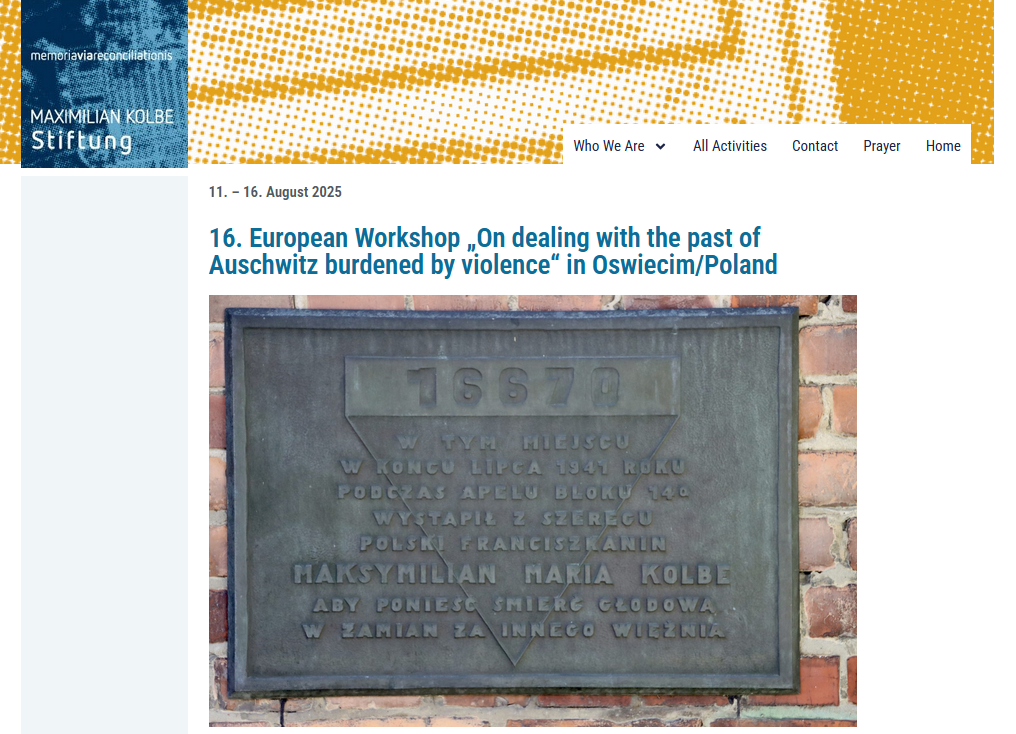
„Gemeinsam von Auschwitz lernen – Beziehungen konstruktiv gestalten“: Unter diesem Leitwort stand der 16. Europäische Workshop der Maximilian-Kolbe-Stiftung zum Umgang mit der gewaltbelasteten Vergangenheit von Auschwitz. Vom 11. bis 16. August 2025 kamen dafür Menschen aus verschiedenen Teilen Europas sowie aus Namibia in Oświęcim/Auschwitz zusammen, um über Versöhnung und Dialog vor dem Hintergrund der derzeitigen Konflikte in Europa und globaler Instabilität zu diskutieren.
Mit ihrem Leitfaden „Eine sichere Schule für Jüdinnen und Juden“ wollen die Autoren Marc Grimm und Florian Beer Antisemitismus nicht nur theoretisch betrachten, sondern Lehrkräften und anderen Bildungsfachkräften für ihren Berufsalltag etwas Praktisches an die Hand geben: 35 Fragen und ihre Antworten geben Anstoß, darüber zu diskutieren, was in jeder einzelnen Schule gemacht werden kann – um aufzuklären, präventiv vorzusorgen und Themen aufzugreifen, die häufig unausgesprochen bleiben. Neben der überarbeiteten deutschen Fassung steht der Leitfaden nun auch auf Englisch, Spanisch und Arabisch kostenlos zum Download zur Verfügung.
Join the European Community of Friends of Standing Together for an Online Talk & Solidarity Event with activists from the Tel Aviv University Chapter of Standing Together
(Language: English, with automatic subtitles in German & French)
Across Gaza, Israel’s war of annihilation continues to claim thousands of innocent lives, and the hostages remain in captivity. In the midst of this relentless violence and grief, a joint Israeli-Palestinian movement is standing firm, refusing to surrender to despair.
As active supporters from afar – many with deep personal ties to the land and its people – the European Friends of Standing Together wish to honour the movement’s role as the foremost voice confronting a corrupt government determined to drag the country into a pointless and endless war, because seeing them take to the streets gives us hope as well. Together we say: This war must end. There is another way.
On 13 August, the European Friends of Standing Together – from Belgium, Berlin, France, Sweden, and beyond – invite you to an urgent online conversation with activists from the Tel Aviv University Chapter of Standing Together. Register here.
You will hear firsthand:
How students are resisting from within Israel
Stories of courageous co-resistance to the war of annihilation in Gaza
The role of European solidarity in building a future of equality and justice
There will also be space for your questions and reflections.
💜 Your participation matters. This is more than a talk – it is also a chance to act. Every donation to the “Fighting for Life” campaign made before 17 August will be doubled by supporters in Israel-Palestine and abroad. Your contribution will directly strengthen this growing movement.