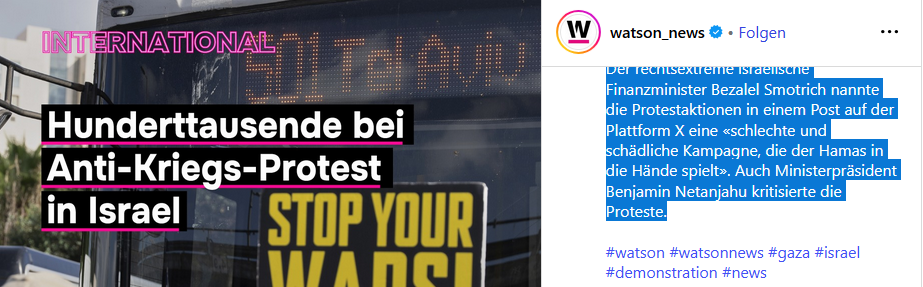
Hunderttausende Demonstrantinnen und Demonstranten haben sich in Tel Aviv und Jersualem versammelt; es handelt sich um eine der grössten Demonstrationen in Israel seit dem Wiederaufflammen des Krieges im Oktober 2023.
Die Demonstranten forderten die Beendigung des Gaza-Kriegs und die sofortige Freilassung der Hamas-Geiseln. Zudem riefen sie die israelische Regierung dazu auf, ihre Entscheidung rückgängig zu machen, die Stadt Gaza und andere Gebiete im Gazastreifen einzunehmen. Sie blockierten zahlreiche Strassen im Land, darunter auch eine zentrale Schnellstrasse in der Küstenmetropole Tel Aviv.
Mehr als 30 Menschen wurden nach Angaben der Polizei festgenommen. In Jerusalem wurden Wasserwerfer gegen Demonstranten eingesetzt. Die Organisation der Geiselangehörigen hatte für Sonntag – den Beginn der israelischen Arbeitswoche – zu einem landesweiten Streik aufgerufen. Man werde «das Land zum Stillstand bringen», sagte Einav Zangauker am Samstagabend bei einer Kundgebung – ihr Sohn Matan ist eine von 20 lebenden Geiseln im Gazastreifen. Der mächtige Gewerkschafts-Dachverband Histadrut schloss sich dem Streik zwar nicht an, äusserte aber Verständnis für den Schritt.
Der rechtsextreme israelische Finanzminister Bezalel Smotrich nannte die Protestaktionen in einem Post auf der Plattform X eine «schlechte und schädliche Kampagne, die der Hamas in die Hände spielt». Auch Ministerpräsident Benjamin Netanjahu kritisierte die Proteste.
Bei einer Demonstration in der israelischen Küstenmetropole Tel Aviv haben zahlreiche Menschen ihre Solidarität mit den Geiseln zum Ausdruck gebracht, die seit fast zwei Jahren von der Hamas im Gazastreifen festgehalten werden.
Rund 80 orthodoxe Rabbiner fordern ein Ende der Hungersnot in Gaza
Rund 80 orthodoxe Rabbiner aus verschiedenen Ländern fordern die israelische Regierung auf, der Hungersnot in Gaza ein Ende zu bereiten. Die Initiative für das Schreiben, das der Katholischen Nachrichten-Agentur (KNA) vorliegt, ging demnach von US-Rabbi Yosef Blau aus. Er erklärte: „Wenn Religion dazu benutzt wird, die Verehrung von Macht zu rechtfertigen, verzerrt sie die grundlegende Moral.“ Unkritische Loyalität widerspreche dem Anspruch der Selbstreflexion, der grundlegend für das Judentum sei.
In dem Schreiben heißt es weiter, die Greueltaten der radikalislamischen Hamas entbünden Israel nicht von seiner Verantwortung für die humanitäre Krise im Gazastreifen. Daher müsse das Land eine massenhafte Hungersnot verhindern. Zu den Unterzeichnenden gehört auch der polnische Oberrabbiner Michael Schudrich, der betonte: „Ich liebe Israel – die Nation, das Land, die Menschen.“
Rückbesinnung auf die jüdische Hoffnung
Kritik gibt es auch daran, dass Israels Regierungschef Benjamin Netanjahu keine Ideen für eine Zeit nach dem derzeitigen Krieg entwickelt habe. So entstehe ein Vakuum, das extremen Stimmen innerhalb der Regierung ermöglicht habe, „beunruhigende Vorschläge“ zu verbreiten. Zudem verurteilen die Rabbiner die eskalierende Gewalt durch extremistische Siedler im Westjordanland: Sie habe zum Mord an Zivilisten geführt und die Region weiter destabilisiert.
Dieser historische Moment erfordere, so das Schreiben weiter, „eine Stimme, die in unseren tiefsten jüdischen Werten verwurzelt ist und von unserer traumatischen Geschichte der Verfolgung geprägt ist“.
Die jüdische Hoffnung auf Gerechtigkeit und Mitgefühl erstrecke sich auf alle Menschen. Zu den Unterzeichnenden gehören auch der Dresdner Rabbiner Akiva Weingarten, der britische Rabbiner David Rosen, der norwegische Rabbiner Michael Melchior sowie der dänische Oberrabbiner Jair Melchior.
Die Macht des Wortes: die Wahrheit sagen, Gerechtigkeit einfordern
Liebe Freundinnen und Freunde,
aus unseren Terminologie-Workshops wissen wir, wie tiefgreifend unsere Wortwahl bei der Beschreibung von Konflikten Menschen beeinflusst. Ob wir etwas Genozid, ethnische Säuberung oder Kriegsverbrechen nennen, solche Bezeichnungen sind nicht nur semantisch – sie haben schwerwiegende politische und emotionale Bedeutungen auf der ganzen Welt. Wir wollten verstehen, warum das so wichtig ist. Und nun wissen wir, dass eine Situation zu bezeichnen einen Wunsch widerspiegelt: den Wunsch nach Anerkennung, nach Wandel, nach Verantwortlichkeit, nach internationaler Verantwortung. Menschen beschreiben mit Begriffen nicht nur, was geschieht, sondern sie pochen zugleich darauf, dass etwas geschehen muss – dass Gerechtigkeit geschaffen werden muss. Wir sehen, dass überall auf der Welt Menschen glauben, sich „für eine Seite entscheiden“ zu sollen – dass sie sich nur mit einer Seite solidarisieren und sich gegen die andere stellen sollen. Doch uns, deren Arbeit im jüdisch-palästinensischen Dialog verwurzelt ist, aus der wir Stärke gewinnen, ist klar, dass die Realität so zu sehen, wie sie ist – eben nicht bedeutet, einseitig Partei zu ergreifen. Rechenschaft für Kriegsverbrechen oder Verbrechen gegen die Menschlichkeit einzufordern ist nicht Ausdruck einer Feindseligkeit gegenüber einem Volk – es ist ein Grundsatz, der die Menschenrechte und moralische Klarheit unterstützt. Beim Streben nach Gerechtigkeit geht es nicht um Spaltung; es geht um die Verteidigung universeller Werte und um die Anerkennung aller Menschen, die von Gewalt und Unterdrückung betroffen sind. Darin liegt für uns die ethische Verpflichtung beider Seiten: Leben zu retten, Gerechtigkeit zu schaffen und Heilung für die Opfer zu ermöglichen; und einen Pfad der Rechenschaftslegung und der Transformation für die Täter zu eröffnen – sodass alle in Würde und Hoffnung weitergehen können.
Die entsetzlichen Berichte aus Gaza zerreißen das Herz und sind unstrittig. Der Hunger und die Vernichtung – von Leben, Häusern und ganzen Gemeinschaften – müssen sofort aufhören. Die 1948 vertriebenen/geflüchteten Palästinenser werden vom Staat systematisch zum Schweigen gebracht und ein Klima geschaffen, das viele lähmt und ihnen die Sprache verschlägt; zugleich fühlen sie sich schuldig, während sie die Auslöschung und Zerstörung ihres Volkes und ihre eigene Ohnmacht erleben. Mittlerweile unterstützen jüdische Israelis entweder aktiv die fortdauernde Gewalt, oder ziehen Verleugnung oder Vermeidung vor, anstatt sich der Realität und ihrer Rolle darin zu stellen. In den vergangenen Wochen, im Angesicht des schrecklichen Hungers, sind wir Zeugen starken Widerstands aus beiden Gruppen geworden – und doch ist dies angesichts des Ausmaßes der Grausamkeiten traurigerweise nicht genug.
Wir rufen jeden Einzelnen von Euch auf: Tut alles, was Euch möglich ist, um diese Grausamkeiten zu beenden und Leben zu retten!
Wenn Ihr nicht wisst, wie, helfen wir Euch gern, darüber nachzudenken, wie Eure Resourcen – Eure Stimme, Eure Zeit, Eure Netzwerke, Eure Geldmittel – etwas bewirken können.
In diesem Brief findet Ihr eine Übersicht über unsere Aktivitäten auch unter diesen unerträglichen Bedingungen, aufrechterhalten durch die Hoffnung und die Überzeugung, dass ein anderer Weg sowohl möglich als auch notwendig ist.
Mit freundlichen Grüßen – Roi Silberberg, Direktor, School for Peace
Join the European Community of Friends of Standing Together for an Online Talk & Solidarity Event with activists from the Tel Aviv University Chapter of Standing Together
(Language: English, with automatic subtitles in German & French)
Across Gaza, Israel’s war of annihilation continues to claim thousands of innocent lives, and the hostages remain in captivity. In the midst of this relentless violence and grief, a joint Israeli-Palestinian movement is standing firm, refusing to surrender to despair.
As active supporters from afar – many with deep personal ties to the land and its people – the European Friends of Standing Together wish to honour the movement’s role as the foremost voice confronting a corrupt government determined to drag the country into a pointless and endless war, because seeing them take to the streets gives us hope as well. Together we say: This war must end. There is another way.
On 13 August, the European Friends of Standing Together – from Belgium, Berlin, France, Sweden, and beyond – invite you to an urgent online conversation with activists from the Tel Aviv University Chapter of Standing Together. Register here.
You will hear firsthand:
How students are resisting from within Israel
Stories of courageous co-resistance to the war of annihilation in Gaza
The role of European solidarity in building a future of equality and justice
There will also be space for your questions and reflections.
💜 Your participation matters. This is more than a talk – it is also a chance to act. Every donation to the “Fighting for Life” campaign made before 17 August will be doubled by supporters in Israel-Palestine and abroad. Your contribution will directly strengthen this growing movement.
Die Meldungen aus dem Nahen Osten überschlagen sich. Die SWP Expert:innen Drin. Muriel Asseburg und Dr. Peter Lintl ordnen die Lage in zahlreichen Medienbeiträgen ein:
🔹 Muriel Asseburg spricht sich im Deutschlandfunk Kultur dafür aus, die Anerkennung Palästinas nicht als blauäugig zu betrachten, sondern als Teil eines Maßnahmenpakets inklusive Reform der Autonomiebehörde und internationaler Sicherheitspräsenz & damit ein Schritt in Richtung Konfliktregelung. 🎧 https://lnkd.in/eDVPA4JC
🔹 Peter Lintl fordert im MDR aktuell-Interview einen Geiseldeal und mehr europäischen Druck auf Israels Regierung. Eine Ausweitung des Krieges gefährde die noch lebenden Geiseln und verschärfe die ohnehin katastrophale humanitäre Lage. 🎧 https://lnkd.in/esSx3F2p
🔹 Im rbb Inforadio analysiert Peter Lintl die fehlende Nachkriegsstrategie Israels und warnt vor der maßgeblich innenpolitisch motivierten Kriegsführung Netanjahus. 🎧 https://lnkd.in/eDdczhUS
🔹 In der Frankfurter Rundschau kritisiert Muriel Asseburg das Zögern Deutschlands und der EU. Menschenrechtsverletzungen haben bislang kaum Konsequenzen gehabt, konkrete Schritte europäischer Politik wie etwa eine Aussetzung von Teilen des Assoziierungsabkommens seien überfällig. 📰 https://lnkd.in/e8Qmt2sx
🔹 Im Interview mit Haaretz erklärt Muriel Asseburg, wie die deutsche Israel-Politik zwischen Kritik und Unterstützung schwankt und warum die Anerkennung Palästinas ein starkes Signal wäre. 📰 https://lnkd.in/ew2P7uZ5
🔹 Im Gespräch mit der DW erläutert Muriel Asseburg, warum Deutschland mit der Anerkennung Palästinas zögert und weshalb dieser Schritt dennoch überfällig ist. 🎧 https://lnkd.in/eEAA7rhb
„Israel hat das Recht, sich gegen den Terror der Hamas zu verteidigen. Die Freilassung der Geiseln und zielstrebige Verhandlungen über einen Waffenstillstand haben für uns oberste Priorität. Die Entwaffnung der Hamas ist unerlässlich. Die Hamas darf in der Zukunft von Gaza keine Rolle spielen.
Das in der vergangenen Nacht vom israelischen Sicherheitskabinett beschlossene, noch härtere militärische Vorgehen der israelischen Armee im Gazastreifen lässt aus Sicht der Bundesregierung immer weniger erkennen, wie diese Ziele erreicht werden sollen. Unter diesen Umständen genehmigt die Bundesregierung bis auf Weiteres keine Ausfuhren von Rüstungsgütern, die im Gazastreifen zum Einsatz kommen können.
Die Bundesregierung bleibt zutiefst besorgt über das fortdauernde Leid der Zivilbevölkerung im Gazastreifen. Mit der geplanten Offensive trägt die israelische Regierung noch stärker als bisher Verantwortung für deren Versorgung. Sie muss einen umfassenden Zugang für Hilfslieferungen ermöglichen, auch für UN-Organisationen und andere nicht-staatliche Institutionen. Israel muss nach den richtigen Schritten der letzten Tage die humanitäre Lage in Gaza weiter umfassend und nachhaltig verbessern.
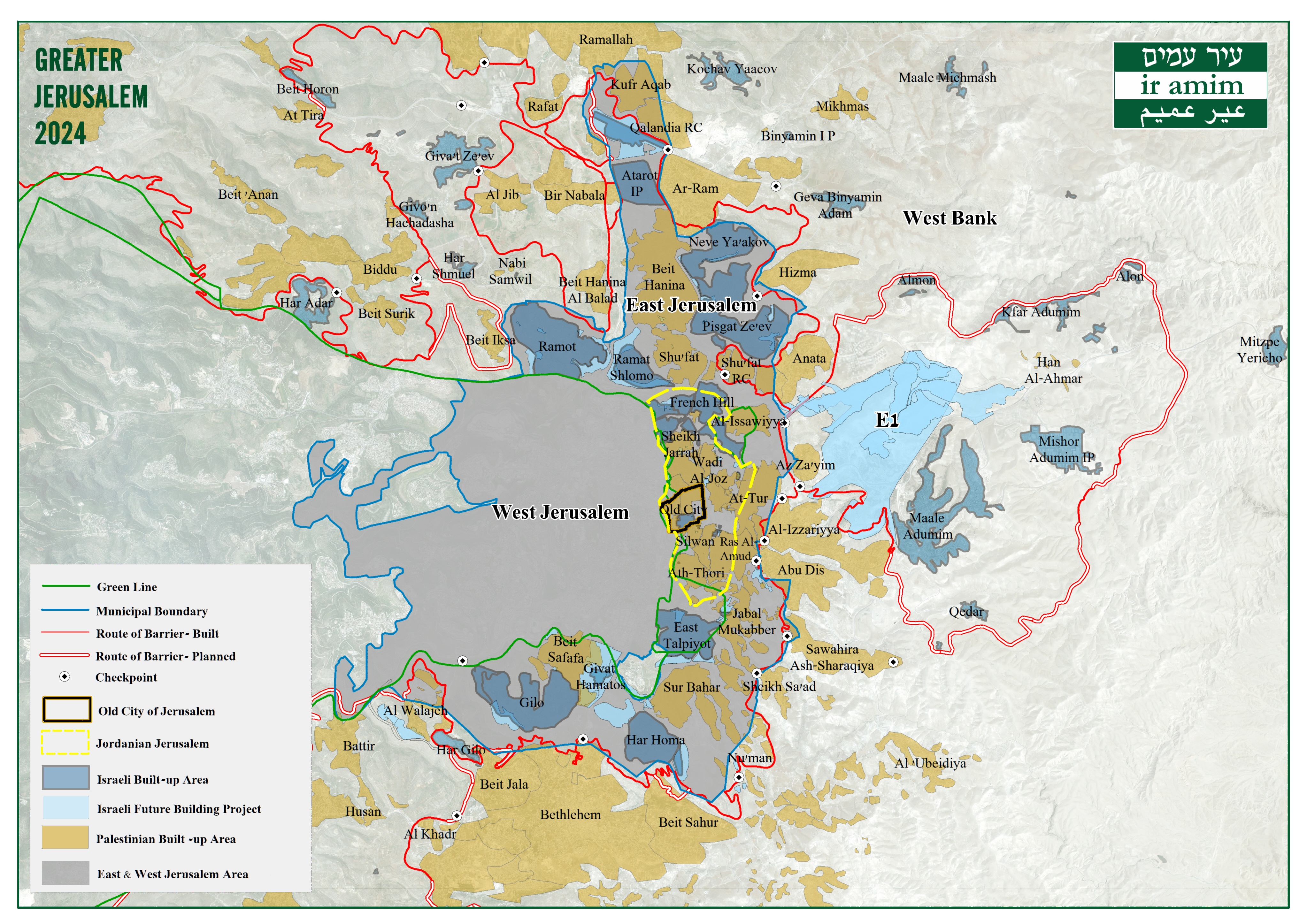
Außerdem fordert die Bundesregierung die israelische Regierung dringend auf, keine weiteren Schritte hin zu einer Annexion des Westjordanlands zu unternehmen.“