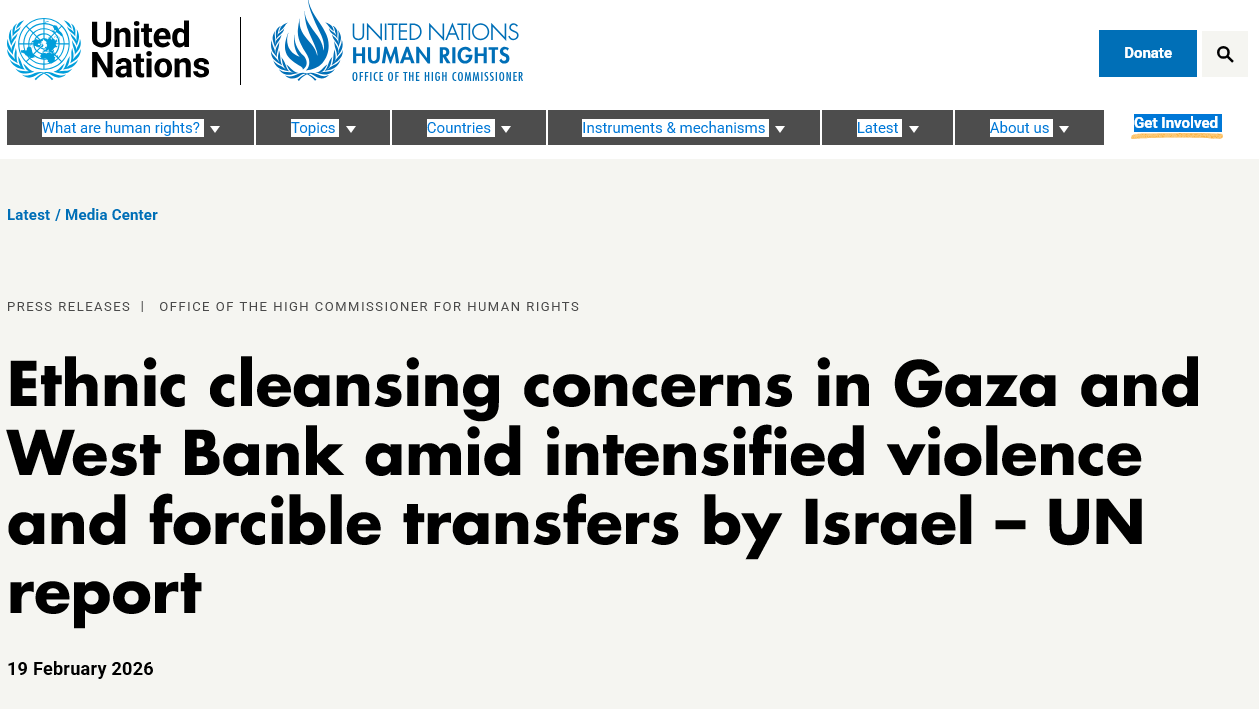
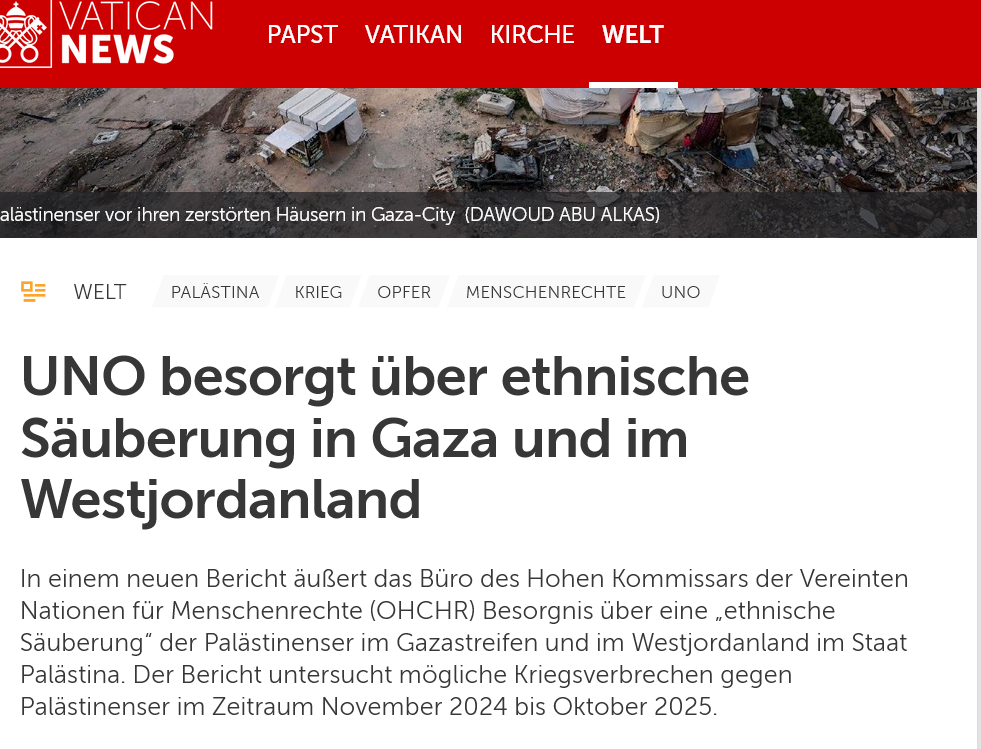
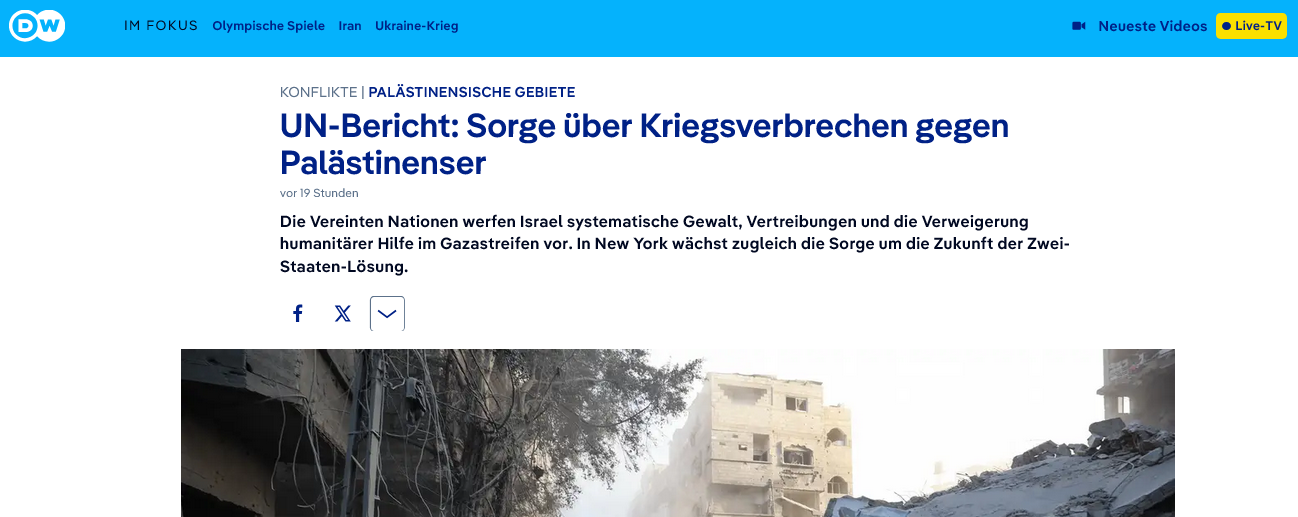
Über 600 Israelis aus dem akademischen Leben protestieren in einer Petition an die internationale Gemeinschaft und Zivllgesellschaft gegen nochmals angestiegenen Siedlerterror. Hier ein Link zu einem kurzen FR-Stück von Inge Günther.
Und dazu ein Gespräch mit Yuli Novak, der Chefin der NGO B’Tselem, geführt von Judith Poppe auf https://qantara.de
EIn Fallbeispiel aus der Westbank: The Occupation of the Sun – digital aufbereitet vom Caravan Collective
Research and documentary project investigating how Israel employs the use of solar energy as a means of Palestinian land confiscation and exploitation in the occupied West Bank. We focus on the Jordan Valley in the northern West Bank, looking at two Palestinian villages – Al-Farsiya and Nu’eima, and two Israeli settlements – Shadmot Mehola and Na’ama.
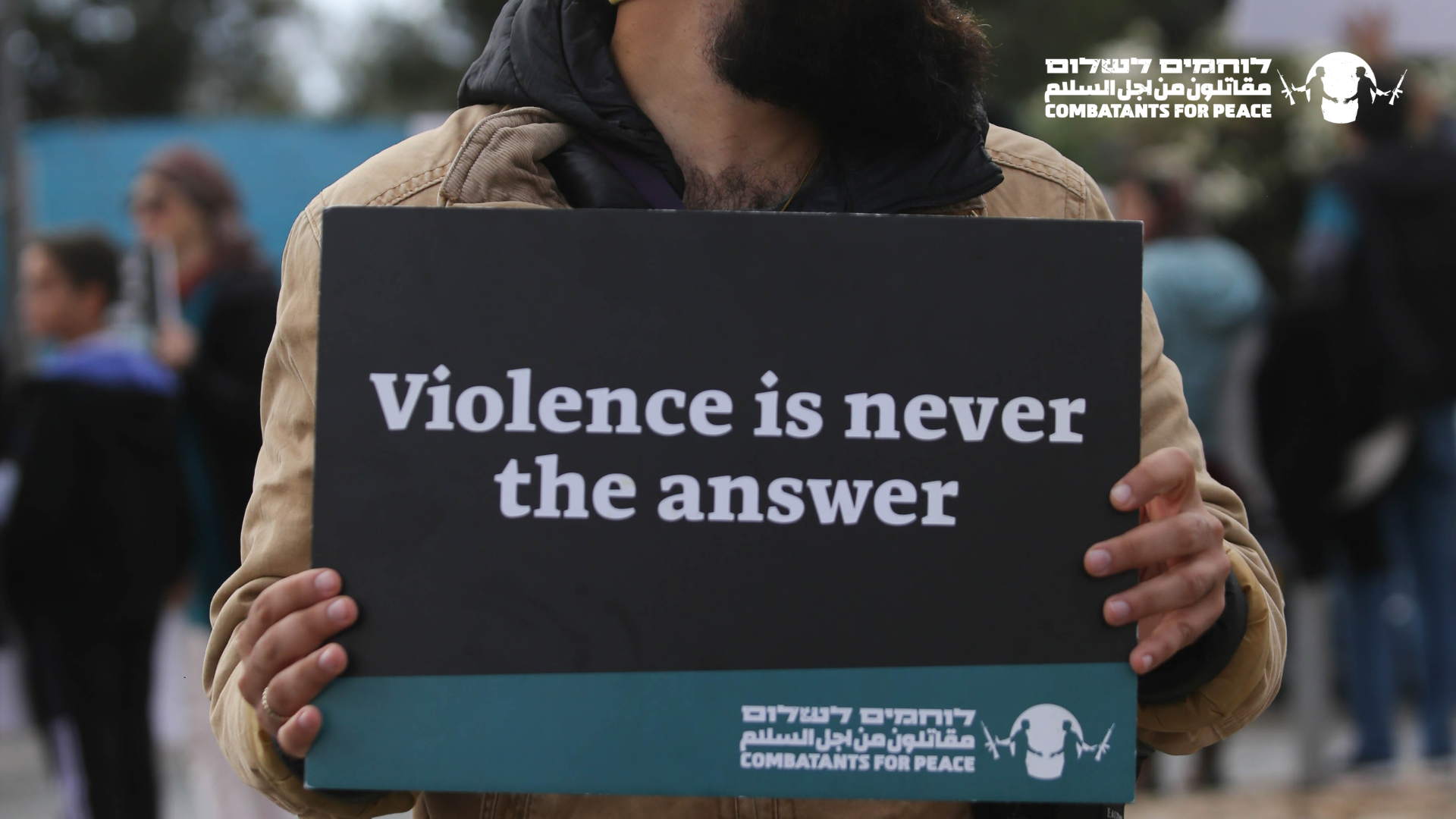
Below is message of CfP that they shared on the social media to with their International allies
The Palestinian and Israeli members of Combatants for Peace are united in our profound alarm at the current military escalation between the United States, Israel, and Iran.
As a joint movement committed to nonviolence and to ending the occupation through political means, we firmly reject the belief that expanded military force will bring safety or stability to our region.But why do we feel like this?
A few days ago in the West Bank, two Palestinian brothers were shot and killed by settlers in the village of Qaryut, part of a documented rise in settler violence and displacement that human rights organizations and UN monitors have repeatedly warned the world about. Such attacks are not isolated eruptions of chaos; they unfold within a system of occupation that fragments Palestinian life, weakens accountability, and entrenches a reality of unequal rights that corrodes any genuine prospect for peace.
In Israel, civilians have been killed and injured by Iranian missile strikes on residential areas, a stark reminder that when confrontation escalates between states, it is ordinary people who absorb the consequences. International humanitarian law is unequivocal: civilians must never be targeted, and indiscriminate attacks on populated areas are unlawful. As governments invoke deterrence and security to justify their actions, Israeli and Iranian families mourn loved ones as the confrontation spreads. Official statements speak in strategic terms; on the ground, it is grief that endures.
We refuse the hierarchy of grief that measures one life against another, and we reject the logic that treats civilian deaths as currency in a wider struggle. What binds these realities together is not only escalation between states, but the political structures that normalize and perpetuate harm – occupation, annexation, collective punishment, and regional brinkmanship that treats civilian lives as leverage rather than as equal human beings entitled to protection and dignity.
Moral clarity at this moment requires holding these truths together: opposing attacks on civilians everywhere while confronting the underlying reality of occupation, oppression and entrenched injustice that makes repeated escalation inevitable. Expanding war will not resolve either; it will only prologue the suffering.
If we are serious about protecting civilian life, we must be serious about ending the systems that endanger it. In hope,
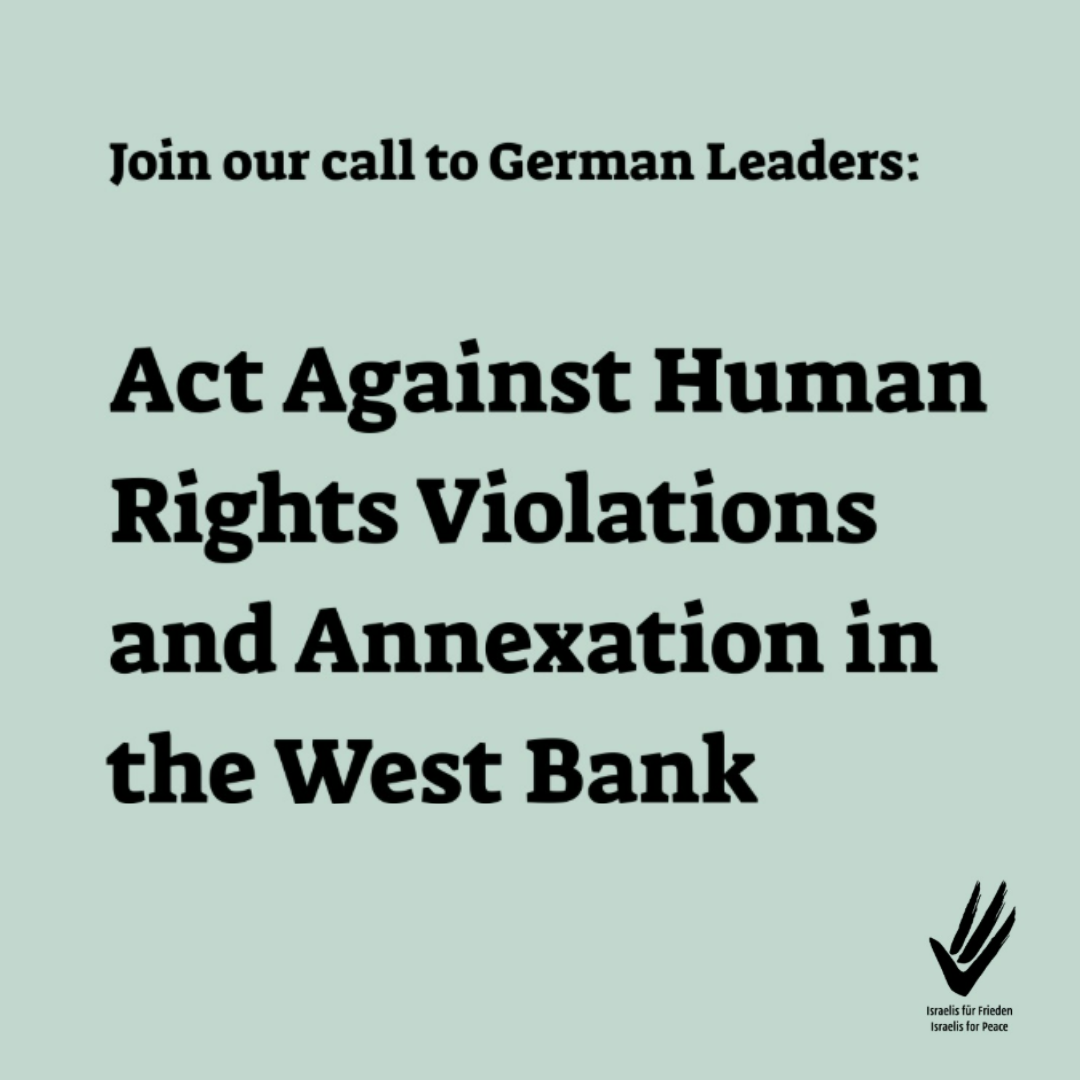
Open Letter for German Action Against Human Rights Violations in the West Bank & More Updates
In the last days, we’ve been collecting signatures for an open letter against the atrocities in the West Bank. Here is a part of it:
“Since the announcement of a fragile ceasefire in Gaza in October 2025, international attention has largely shifted away from the region. However, the Israeli government has continued to severely violate the ceasefire and its human rights obligations, in Gaza and in the occupied West Bank. We call upon Germany, one of Israel’s closest allies, to fulfill its own obligations under international law and its commitment to human rights by acting decisively against these ongoing atrocities.
The situation in the West Bank is deteriorating rapidly. In recent months, there has been a surge in settler violence against Palestinians, particularly targeting herding communities in Area C. These attacks – which include the daily harassment of farmers, targeting of humanitarian activists – Israelis and internationals – and organized raids on Palestinian villages – often occur with the tacit agreement or active assistance of the Israeli military. According to the Israeli human rights organization B’Tselem, more than 44 communities have been displaced since October 2023.
Germany holds a unique position of influence in the West Bank as a primary financial supporter of both the Palestinian Authority and local civil society. While the U.S. has turned a blind eye to the escalation of extremist violence and ethnic cleansing in the West Bank, the many military raids on cities and villages in the region must not enjoy tacit international approval. We urge Germany to shift its policy and pressure Israel to cease the annexation and human rights violations.“
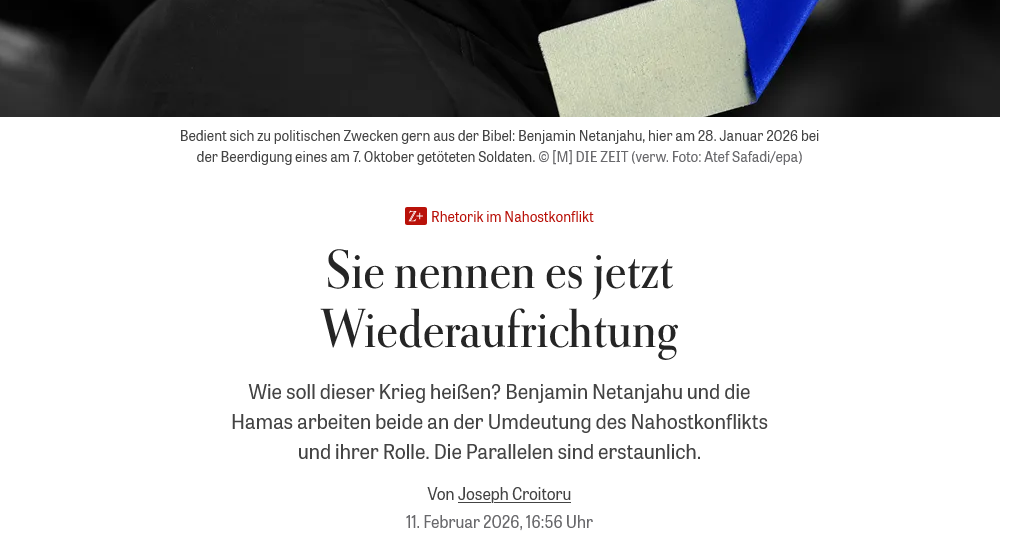
Ein Beitrag von Joseph Croitoru auf Zeit-Online über die Auseinandersezuimg um die Deutungshoheit in den aktuellen politischen Auseinandersetzung in Israel / Palästina
NEW EPISODE Hold the Fire FROM THE INTERNATIONAL CRISIS GROUP
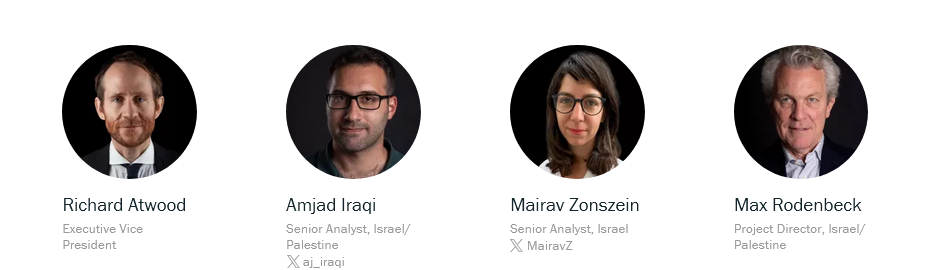
In this episode of Hold Your Fire!, Richard Atwood speaks with Crisis Group experts Amjad Iraqi, Mairav Zonszein and Max Rodenbeck about President Donald Trump’s Board of Peace and its implications for Gaza. They unpack the structure of the board’s different layers, how Palestinians are reacting to the new Palestinian technocratic Gaza committee and what that committee will do. They look at conditions on the ground in Gaza amid frequent ceasefire violations and Hamas’s continued hold of parts of the strip. They also assess the obstacles to moving the peace plan forward, including working out agreement on the sequencing of Hamas decommissioning weapons, on one hand, and Israeli withdrawing troops and letting in reconstruction aid on the other, as well as the still-uncertain prospects for an international stabilisation force in the strip.
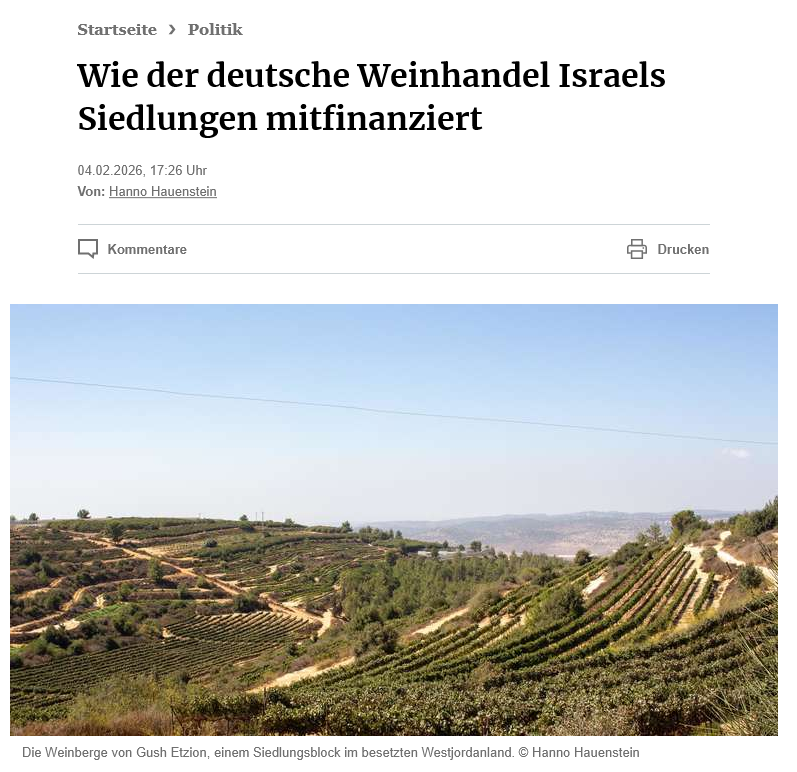
Weine aus israelischen Siedlungen werden in deutschen Supermärkten, Online-Shops und auf Fachmessen als ‚israelisch‘ vermarktet – und normalisieren so die illegale Besatzung der palästinensischen Gebiete
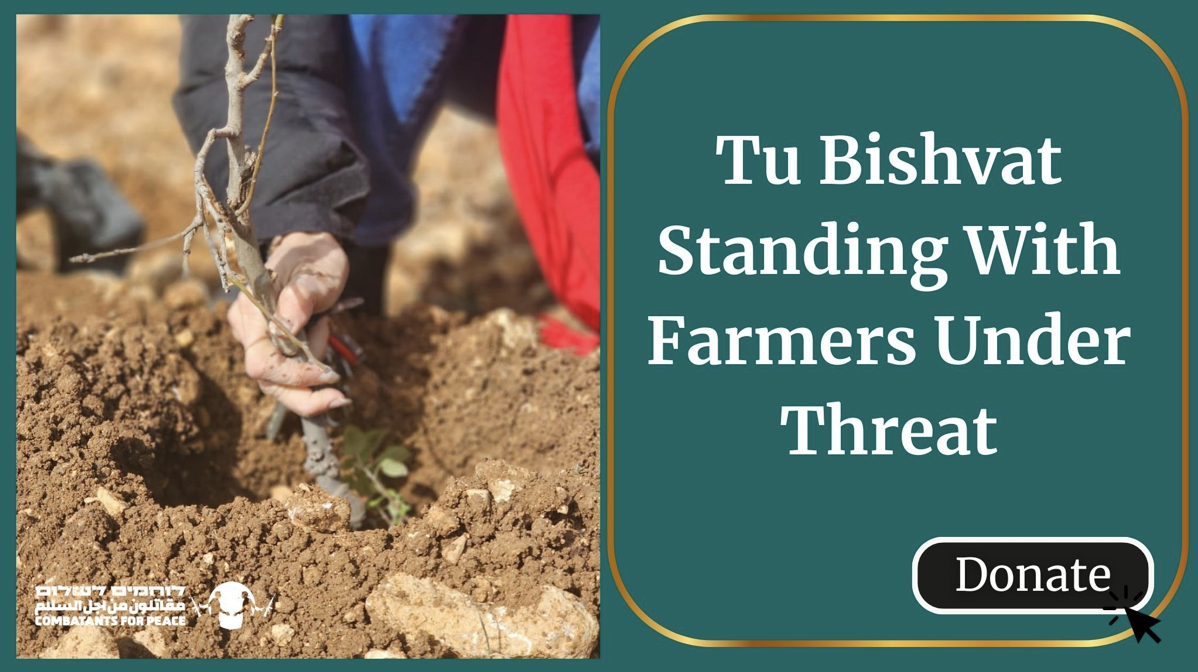
Tu Bishvat calls us to protect the people whose lives and dignity are tied to the land. Below, we share a message from Combatants for Peace (from Sunday) about their recent work standing with Palestinian farmers under threat, and an invitation to give in honor of the recent holiday:
Tonight marks the beginning of Tu Bishvat, the Jewish New Year of the Trees – a time that calls for renewal, responsibility, and the protection of land and the people who depend on it. We chose to mark this moment as a call to action and a reminder that Israelis and Palestinians can, and must, stand together to protect livelihoods and resist dispossession, settler terrorism and incitement.
On Friday, activists from Combatants for Peace and Bnei Abraham gathered to support a Palestinian organic farm located in the heart of the Gush Etzion settlement bloc. The family has lived and farmed this land for more than 200 years. Today, they are the only Palestinian farming family left in the area, surrounded by settlements, outposts, and a growing pattern of settler violence, intimidation, and land takeover.