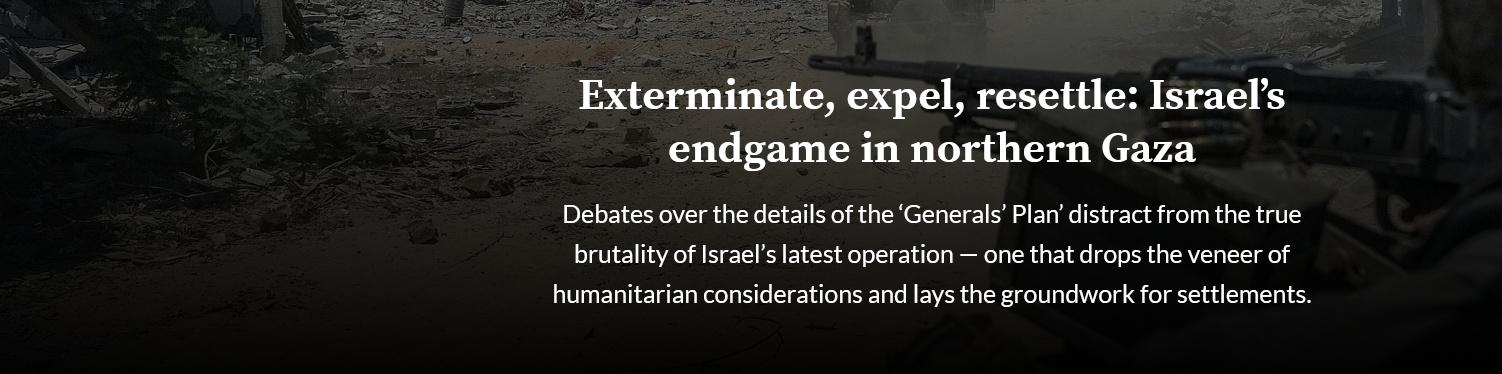
Seit Oktober 2023 wütet im Gazastreifen ein verheerender Krieg. Die Informationen über die hohe Anzahl ziviler Opfer, die Vertreibung nahezu der gesamten Bevölkerung innerhalb des Küstenstreifens, das Ausmaß an Zerstörung von Gebäuden, Infrastruktur und landwirtschaftlichen Flächen, die Hungersnot sowie der Ausbruch von Polio übersteigen unser Vorstellungsvermögen und sind kaum auszuhalten….
Der ehemalige israelische Verteidigungsminister Mosche Jaalon, 2016 nach Meinungsverschiedenheiten mit MP Netanyahu zurückgetreten, hat sich in Interviews zur Kriegsführung und den Zielen seiner Landes im Kampf gegen die Palästinenser:innen geäußert. Er sprach dabei u.a von „ethnischen Säuberungen“ im Gazastreifen und von „Kriegsverbrechen“.
Sicherheitsminister Itamar Ben Gvir sprach von einer „Schande“ für Israel, „so eine Person als Armeechef und Verteidigungsminister gehabt zu haben“. Netanjahus Likud-Partei nannte Jaalons Äußerungen „unehrliche Bemerkungen“ und bezeichnete sie als „Geschenk für den IStGH und das Lager der Israel-Feinde“.
Der in Berlin lebende und aus Israel stammende Autor, Kurator und Aktivist, Mati Shemeolof schreibt in einem Beitrag für die Open-Source-Initiative der Berliner Zeitung, was der Krieg, die Kriege in Nahost mit ihm „hier“ machen …
„Passend“ zu den Nachrichten über eine anstehende mögliche Annektion des Besetzten Gebiete, kommt in die deutschen Kinos der auf der Berlinale 2024 prämierte Film No Other Land der Filmemacher Yuval Abraham und Basel Adra: Susanne Lenz schreibt zur Vorführung im Kino Babylon in der Berliner Zeitung:
Israel verbietet die Tätigkeit der UNRWA auf seinem Territorium und damit defacto auch in Palästina – ein alter „Widersacher“ soll damit erledigt werden
Hier einmal die Stellungnahme des britischen Premierminister:
Prime Minister’s Office, 10 Downing Street and The Rt Hon Sir Keir Starmer KCB KC MP London, 28 October 2024
The UK is gravely concerned at the UNRWA bills that Israel’s Knesset has passed. This legislation risks making UNRWA‘s essential work for Palestinians impossible, jeopardising the entire international humanitarian response in Gaza and delivery of essential health and education services in the West Bank.
The humanitarian situation in Gaza is simply unacceptable. We need to see an immediate ceasefire, the release of the hostages and a significant increase in aid to Gaza.
Under its international obligations, Israel must ensure sufficient aid reaches civilians in Gaza.
Only UNRWA can deliver humanitarian aid at the scale and pace needed. We pay tribute to the 222 UNRWA staff who have lost their lives in the conflict. UNRWA has a UN mandate to support Palestinian refugees. We urge Israeli lawmakers to ensure that UNRWA can continue to deliver its essential work.
Nimrod Flaschenberg, eh.parlamentarischer Berater der linken Chadasch-Allianz in Israel und Alma Itzhaky, israelische Künstlerin und Wissenschaftlerin, Mitbegründerinnen der in Berlin ansässigen Gruppe Israelis for Peace, enfalten auf der Plattform Jakobin.de ihre Sicht auf die Ereignisse und Folgen des 7. Oktober (- und ihren Optismus, daß es andere Zukunft geben kann).
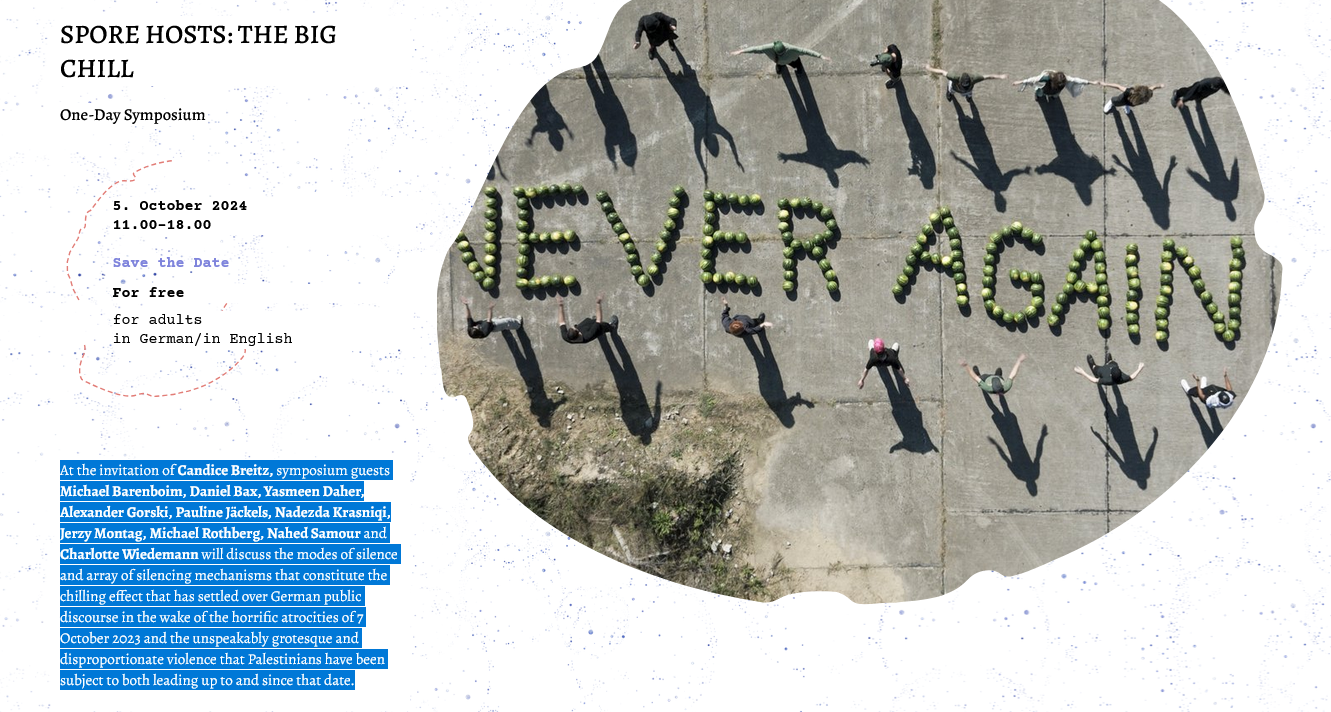
At the invitation of Candice Breitz, symposium guests Michael Barenboim,Daniel Bax, Yasmeen Daher,Alexander Gorski,Pauline Jäckels,Nadezda Krasniqi,Jerzy Montag,Michael Rothberg,Nahed Samour and Charlotte Wiedemann will discuss the modes of silence and array of silencing mechanisms that constitute the chilling effect that has settled over German public discourse in the wake of the horrific atrocities of 7 October 2023 and the unspeakably grotesque and disproportionate violence that Palestinians have been subject to both leading up to and since that date.