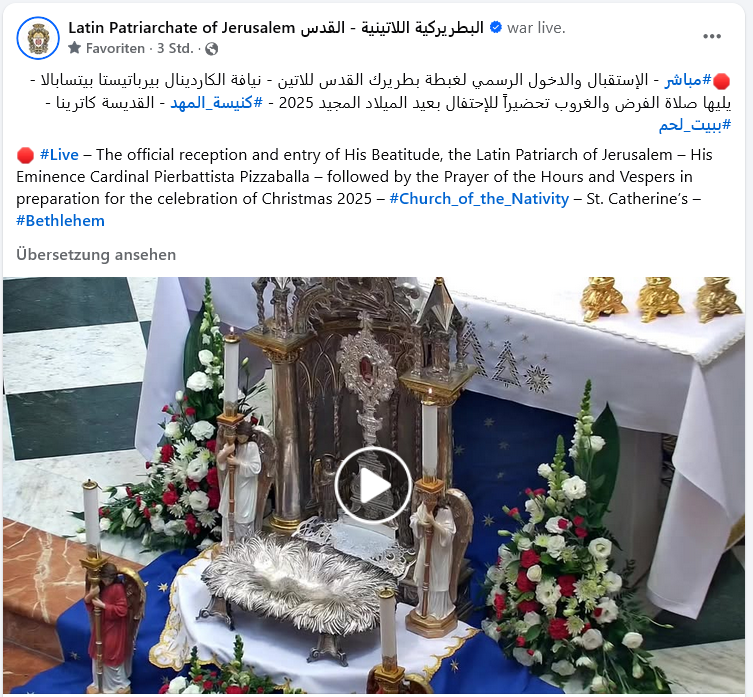
Am / Vom Ende einer regelbasierten Weltordung (Wenn sie je begonnen hat)
Ein lesenswerter Beitrag des kanadischen Miniterpräsidenten Mark Carney in Davos
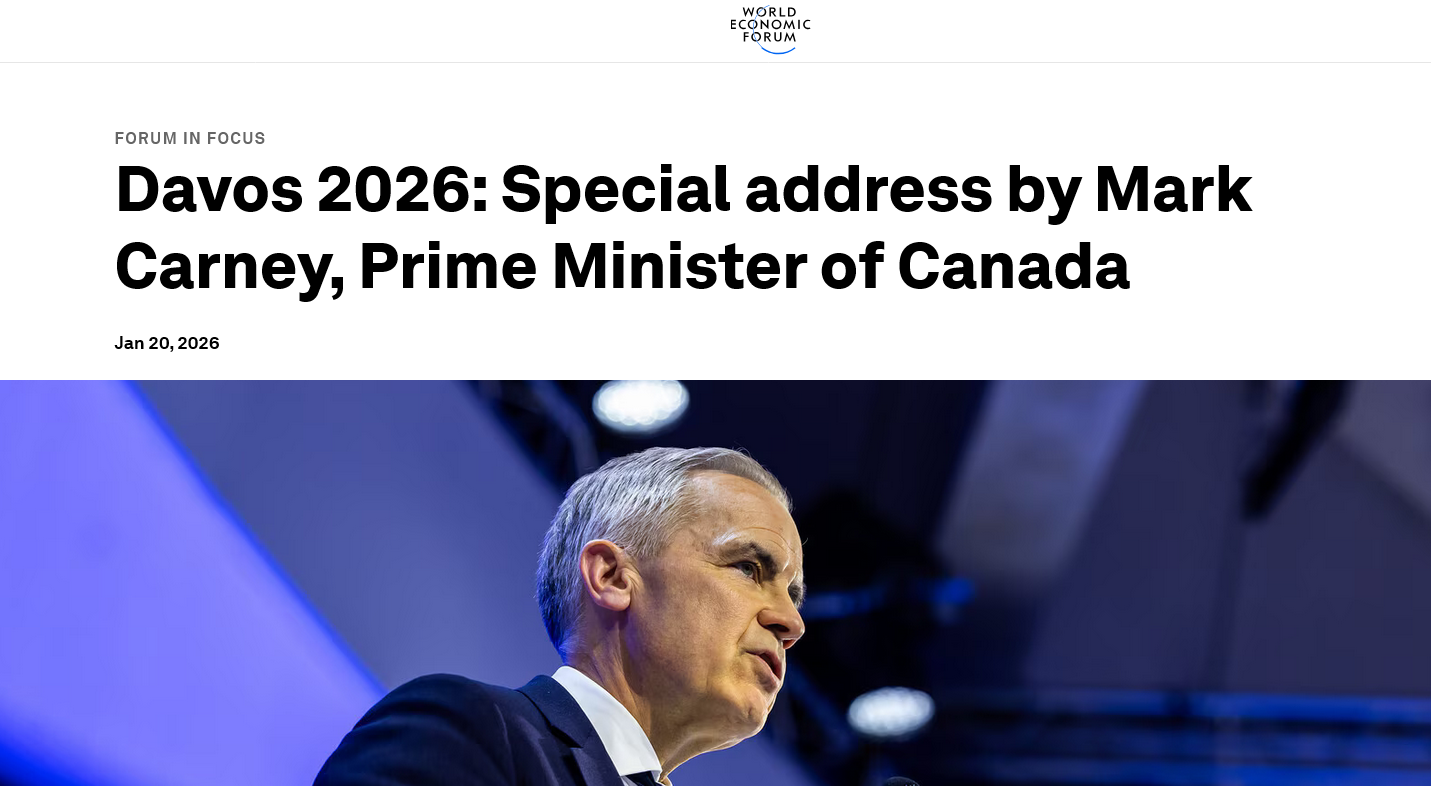
Am / Vom Ende einer regelbasierten Weltordung (Wenn sie je begonnen hat)
Ein lesenswerter Beitrag des kanadischen Miniterpräsidenten Mark Carney in Davos
Informationsplattform fachinfo-verschwörungsideologie.de ist jetzt online und bietet praxisorientierte Fachinformationen zu Verschwörungsideologien für Berater:innen in der Sozialen Arbeit und Fachkräfte aus dem Feld der nonformalen politischen Bildung
Völkisch-autoritäre Verschwörungsideologien beeinflussen Familien, Freundschaften oder Arbeitsbeziehungen und sind damit auch eine Herausforderung für Beratungs- und Bildungsprozesse. In einem interdisziplinären Forschungsprojekt haben die TH Köln und die Universität zu Köln daher eine Webseite mit praxisorientierten Fachinformationen für die Soziale Arbeit und die politische Bildung ins Leben gerufen. Auf www.fachinfo-verschwörungsideologie.de finden Fachkräfte aus Beratung und politischer Bildung unter anderem fachlich valide Erklärungen zu Verschwörungsideologien sowie Übersichten zu aktuell relevanten Verschwörungserzählungen und Gruppierungen. Praxisnahe Materialien für Bildungs- und Beratungssituationen, Handlungshilfen zur direkten Anwendung in Beratungsgesprächen und Hinweise zu relevanten Praxispartner*innen und unterstützenden Institutionen sollen die tägliche Arbeit erleichtern. Die Informationsplattform wird sukzessive um Fallbeispiele oder weitere empirische Ergebnisse zu den Auswirkungen von Verschwörungsideologien erweitert.
„Zahlreiche Materialien, die auf der neuen Informationsplattform zur Verfügung gestellt werden, basieren auf den quantitativen und qualitativen Erhebungen, die im Rahmen des RaisoN-Projekts durchgeführt worden sind. Insofern bietet die Informationsplattform den Nutzer*innen neben Tipps für Handlungsstrategien auch einen kompakten Einblick in den Stand der Forschung in diesem Feld“, sagt Professorin Dr’in. Gudrun Hentges, Mitglied der Projektleitung.
Die Webseite richtet sich in erster Linie an Fachkräfte aus Beratung und politischer Bildung, die im Rahmen ihrer Arbeit im Kontakt mit Personen stehen, die wiederum mit Menschen mit einer Affinität zu Verschwörungserzählungen in ihrem sozialen Umfeld konfrontiert sind. Darüber hinaus sind die Inhalte der Informationsplattform für Wissenschaftler:innen und die interessierte Öffentlichkeit relevant.
„Über die Fachinformationsplattform möchten wir Forschungsergebnisse direkt mit denjenigen teilen, die tagtäglich in Beratung und Bildung tätig sind – damit wissenschaftliche Erkenntnisse in die Praxis einfließen und handlungsorientierte Strategien im Umgang mit Verschwörungsideologien gefördert werden können“, sagt Prof‘in Dr‘in Birgit Jagusch von der TH Köln und Mitglied der Projektleitung.
Das Verbundprojekt „RaisoN – Radikalisierungsprozesse durch Verschwörungsideologien: Auswirkungen auf den sozialen Nahraum als Herausforderung für die Bildungs- und Beratungsarbeit“ wird von der TH Köln und der Universität zu Köln durchgeführt. Das interdisziplinäre Projektteam erforscht, wie völkisch-autoritäre Verschwörungsideologien den sozialen Nahraum beeinflussen und welche Herausforderungen sich daraus für Beratungs- und Bildungsprozesse ergeben. Ein weiterer Fokus liegt darauf, wie die wissenschaftlichen Erkenntnisse praxisgerecht in Beratung und Bildung transferiert werden können.
RaisoN wird im Rahmen der Förderlinie „Aktuelle und historische Dynamiken von Rechtsextremismus und Rassismus“ vom Bundesministerium für Forschung, Technologie und Raumfahrt (BMFTR) gefördert. Das Projekt läuft noch bis zum 30. Juni 2026.


„Gaza erzählt: Literatur im Schatten des Genozids“.
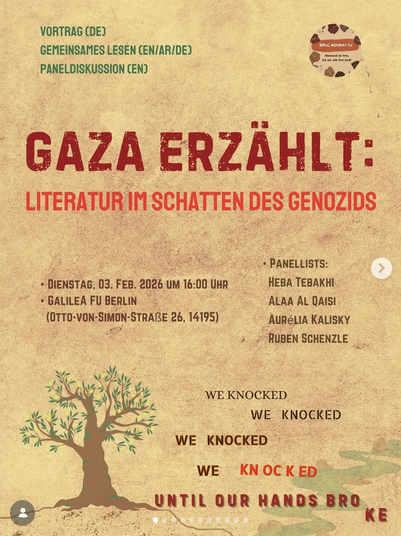
BIPoC Referat des AStA FU lädt ein zu einer Literaturveranstaltung
„Gaza erzählt: Literatur im Schatten des Genozids“.
Gemeinsam mit Autor*innen und Literaturwissenschaftler*innen soll folgenden Fragen nachgegangen werden:
– Was schreiben die Autor*innen — oder können sie überhaupt schreiben —, während ihre Wohngegend, ihr Zuhause und ihre Familien bombardiert werden und Hunger bis hin zum Verhungern erleiden?
– Warum schreiben Autro*innen inmitten des Elends? Um zu überleben? Um zu erinnern? Damit die Welt sie hört und auf ihr Leid aufmerksam wird?
– Ist es sinnvoll, diese Texte als Literatur des Genozids zu bezeichnen und einzuordnen?
– Wie beeinflußt die schnelle Übersetzung die Rezeption dieser Literatur? Verliert sie dadurch ihren Kontext — oder gewinnt sie notwendige Sichtbarkeit?
Dienstag, 03. Februar 2026, 16 Uhr
📍 GalileA @galileafuberlin (über Mensa 2 FU Berlin; Otto-von-Simson-Str. 26)
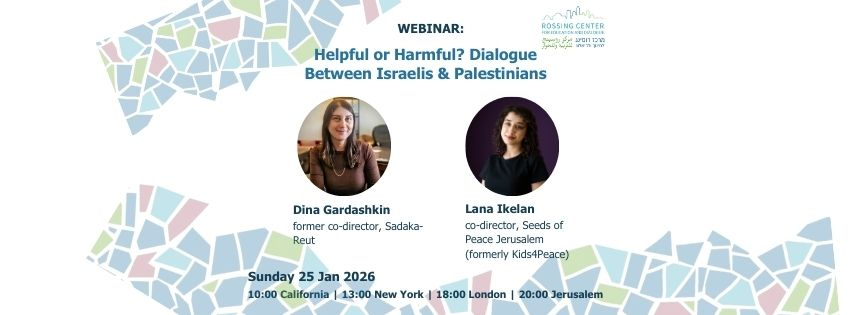
Dialogue Between Israelis & Palestinians
We’re starting from a shared premise: contact alone is not enough. If dialogue is meant to encourage participants to critically examine reality and imagine change, it must be intentionally designed and carefully facilitated. But that raises a central dilemma:
Is dialogue most effective when it happens together or separately?
Both having begun their own journeys as participants in dialogue groups and working their way up to leadership positions, our speakers bring deep, lived experience from the field:
Lana Ikelan, Co-Director of Seeds of Peace Jerusalem (formerly Kids4Peace), engages young people across deep asymmetries of power and narrative.
Dina Gardashkin, former Co-Director of Sadaka-Reut, confronts inequality, education, and political responsibility.
Together with Lana and Dina, questions such as will be explored:
• How does the group setting impact the process participants undergo?
• What kinds of transformation are possible only in mixed groups or only in separate groups?
• What are the risks and limitations of each framework?
 Sunday, January 25, 2026 | 8 pm Jerusalem time (19.00 Uhr MEZ)
Link to register:
https://us02web.zoom.us/…/register/ro4qFnh1RhqE7PpV2vdNaA
This conversation is for educators, facilitators, activists, donors, and anyone grappling seriously with what dialogue can — and cannot — do in our current reality.
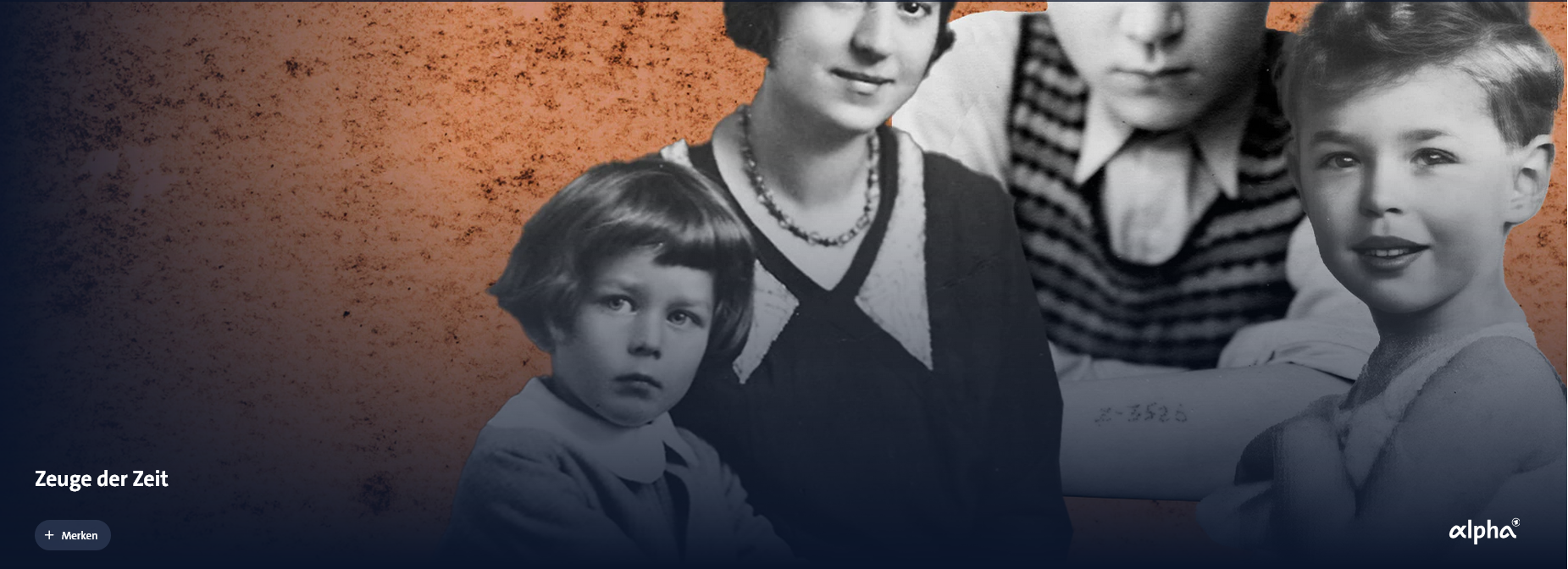
Ein Bericht in der ARD Mediathek über Giden Lev, geboren als Peter Wolfgang Löw 1935 in Karlsbad
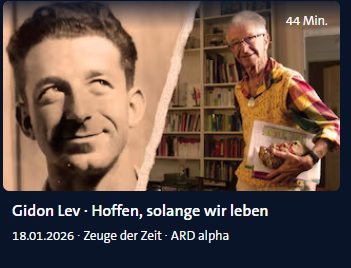
Gidon Lev ist Holocaustüberlebender – und eine der wohl außergewöhnlichsten Stimmen auf Social Media. Dieser Zeitzeugenbericht erzählt von seinem bewegten Leben. Gidon Lev wächst als einziges Kind seiner jüdischen Eltern im böhmischen Ort Karlsbad auf. Mit dem Münchner Abkommen von 1938 endet Gidons Kindheit …
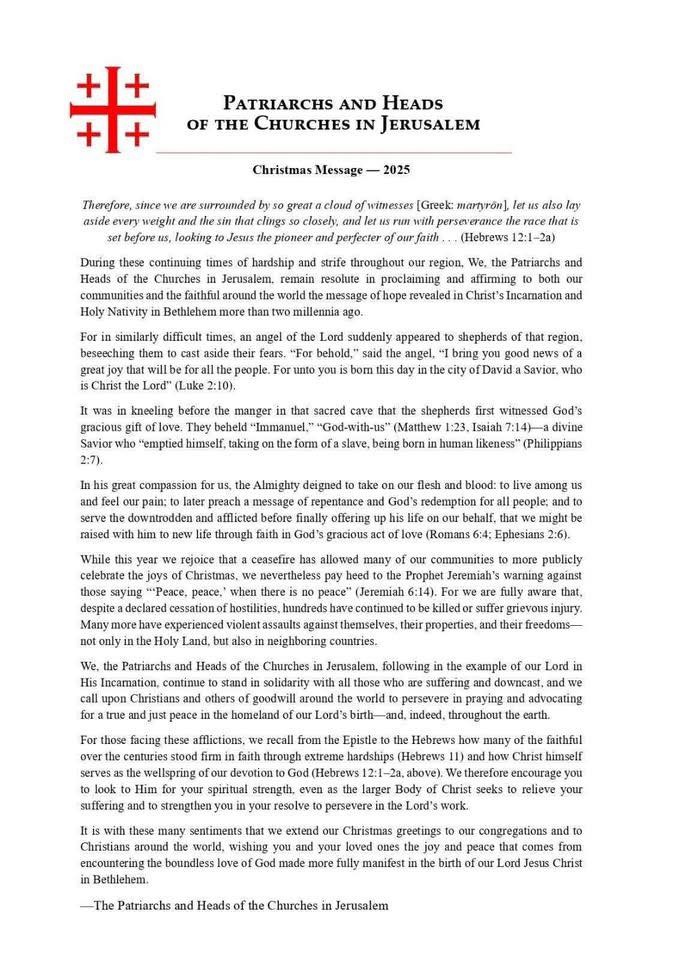
Therefore, since we are surrounded by so great a cloud of witnesses [Greek: martyrōn], let us also lay aside every weight and the sin that clings so closely, and let us run with perseverance the race that is set before us, looking to Jesus the pioneer and perfecter of our faith . . . (Hebrews 12:1–2a)
During these continuing times of hardship and strife throughout our region, We, the Patriarchs and Heads of the Churches in Jerusalem, remain resolute in proclaiming and affirming to both our communities and the faithful around the world the message of hope revealed in Christ’s Incarnation and Holy Nativity in Bethlehem more than two millennia ago.
For in similarly difficult times, an angel of the Lord suddenly appeared to shepherds of that region, beseeching them to cast aside their fears. “For behold,” said the angel, “I bring you good news of a great joy that will be for all the people. For unto you is born this day in the city of David a Savior, who is Christ the Lord” (Luke 2:10).
It was in kneeling before the manger in that sacred cave that the shepherds first witnessed God’s gracious gift of love. They beheld “Immanuel,” “God-with-us” (Matthew 1:23, Isaiah 7:14)—a divine Savior who “emptied himself, taking on the form of a slave, being born in human likeness” (Philippians 2:7).
In his great compassion for us, the Almighty deigned to take on our flesh and blood: to live among us and feel our pain; to later preach a message of repentance and God’s redemption for all people; and to serve the downtrodden and afflicted before finally offering up his life on our behalf, that we might be raised with him to new life through faith in God’s gracious act of love (Romans 6:4; Ephesians 2:6).
While this year we rejoice that a ceasefire has allowed many of our communities to more publicly celebrate the joys of Christmas, we nevertheless pay heed to the Prophet Jeremiah’s warning against those saying “‘Peace, peace,’ when there is no peace” (Jeremiah 6:14). For we are fully aware that, despite a declared cessation of hostilities, hundreds have continued to be killed or suffer grievous injury. Many more have experienced violent assaults against themselves, their properties, and their freedoms—not only in the Holy Land, but also in neighboring countries.
We, the Patriarchs and Heads of the Churches in Jerusalem, following in the example of our Lord in His Incarnation, continue to stand in solidarity with all those who are suffering and downcast, and we call upon Christians and others of goodwill around the world to persevere in praying and advocating for a true and just peace in the homeland of our Lord’s birth—and, indeed, throughout the earth.
For those facing these afflictions, we recall from the Epistle to the Hebrews how many of the faithful over the centuries stood firm in faith through extreme hardships (Hebrews 11) and how Christ himself serves as the wellspring of our devotion to God (Hebrews 12:1–2a, above). We therefore encourage you to look to Him for your spiritual strength, even as the larger Body of Christ seeks to relieve your suffering and to strengthen you in your resolve to persevere in the Lord’s work.
It is with these many sentiments that we extend our Christmas greetings to our congregations and to Christians around the world, wishing you and your loved ones the joy and peace that comes from encountering the boundless love of God made more fully manifest in the birth of our Lord Jesus Christ in Bethlehem.
—The Patriarchs and Heads of the Churches in Jerusalem