Die größten Herausforderungen für ein friedliches Miteinander in Nahost liegen nicht in den Beziehungen der Staaten, sondern auf der Ebene der gesellschaftlichen Versöhnung. Vier Neuerscheinungen vermitteln ein Gefühl für eine mögliche Zukunft der Region.
Muriel Asseburg: Der 7. Oktober und der Krieg in Gaza. Hintergrund, Eskalation, Folgen. München: C. H. Beck 2025. 286 Seiten, 20,00 Euro
Sabine Adler: Israel. Fragen an ein Land. Berlin: Ch. Links 2025. 270 Seiten, 24,00 Euro
Natalie Amiri: Der Nahost-Komplex. Von Menschen, Träumen und Zerstörung. München: Penguin 2025. 416 Seiten, 25,00 Euro
Daniel Gerlach: Die Kunst des Friedens. Eine andere Geschichte des Nahen Ostens – Deals, Friedensverhandlungen & Geheimdiplomatie. München: C. Bertelsmann 2025. 351 Seiten, 25,00 Euro
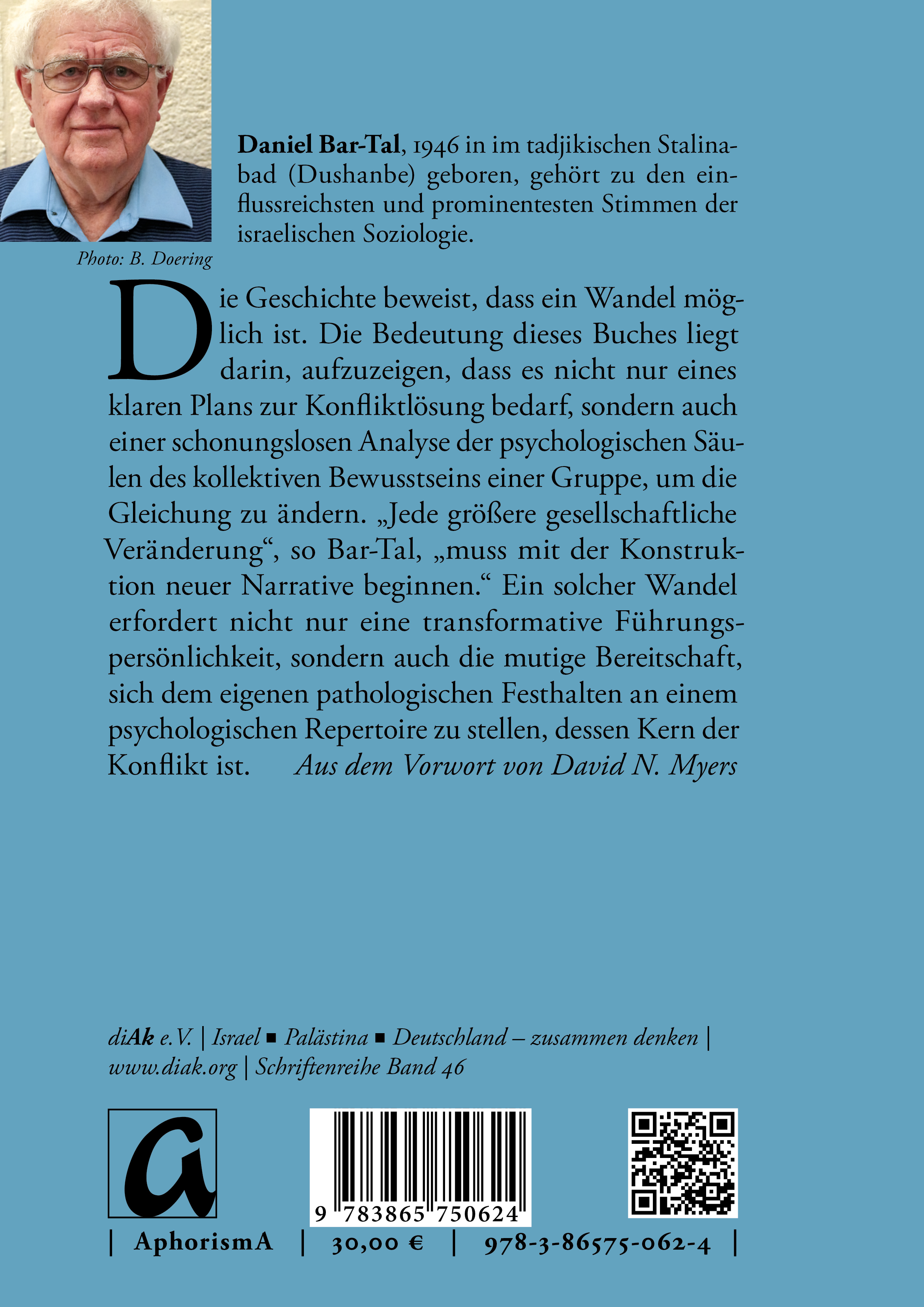
I would like to wish you first of all, health as in our age it is extremely important to feel well and also happiness and of course change of the present era of authoritarianism that plagues the world.
For many years I made it a habit to send New Year wishes to people I met along my path. During the last two years, however, I lacked the energy to continue this tradition, feeling helpless and hopeless. This year, as I approached my 80th birthday, I felt that I must overcome myself. Perhaps this will be the last time I follow this ritual, but I feel a strong need to write.
The truth is that the world has fallen upon me. The genocide carried out by Israeli Jews in Gaza bears, for me, the mark of Cain—one that cannot be erased and will haunt us for centuries. I am part of this and bear responsibility, both as a citizen of Israel and as a Jew whose family was almost entirely annihilated in Treblinka. My grandmother, aunts, uncles, and their children were murdered. Only my mother and her sister survived—two out of nine siblings.
Growing up without a family is incomprehensible, and this absence became a central reason I devoted my academic career to studying how evil evolves within the framework of intractable conflicts. I found a moral model in my aunt, who was sixteen years old and a member of a leftist youth movement. She was on the “safe” side of Warsaw and could have survived, but on April 19, 1943, she returned to the ghetto when her comrades called her to join the uprising. My life’s mission was not only to honor her courage and values, but also to uncover her fate. Three years ago, I finally did. Sent out on April 25, 1943; to seek Polish assistance, she was killed by a German Nazi policeman.
The genocide carried out in Gaza by victims of the Holocaust is appalling and violates all my values—especially as it is largely denied by its perpetrators, who have killed approximately 70,000 Palestinians, wounded about 170,000, and flattened the Gaza Strip. These acts have not ceased; they continue in both the West Bank and Gaza.
The murderous attack on 7th of October 2023 by Hamas in which were murdered about 850 civilians and about 350 soldiers and abducted 251 civilians with women and children cannot justify the genocide. The extreme rightist, religious, racist, and messianic government led to these acts and now denies its responsibility directing the anger solely to 7th of October. At the same time the government under the leadership of Netanyahu turns Israel into dictatorial and anti-democratic country.
Israel has been governed by the right since 2000, following the failure of the Camp David summit and the outbreak of the Second Palestinian Intifada. In the aftermath of the atrocities of October 7, many Israelis shifted further to the right, opposing the establishment of a Palestinian state and increasingly delegitimizing Palestinians as a people. I moved in the opposite direction. I came to understand more deeply the brutality of 58 years of occupation and the consistent trajectory of Israeli governments since 1967: the expansion of Jewish settlements in the occupied territories, the refusal to withdraw fully from them, and—already during the Mandate period—the aspiration to incorporate the West Bank into the future State of Israel.
It is well documented that the majority of Israeli Jews, as well as a large portion of Jews in the diaspora, are indoctrinated from an early age by successive Israeli governments with a sense of collective victimhood, feelings of superiority, the perception of non-Jews as an existential threat, chronic insecurity and fear, heightened patriotism, the delegitimization of Palestinians, and the belief in the moral justness of retaining control over the West Bank.
My state of mind is also deeply affected by developments in the United States under the leadership of Trump, who is undermining the foundations of a democratic state. The world as a whole appears to be moving in an authoritarian direction, painfully reminiscent of the 1930s. We, the older generation, are no longer able to reverse this trajectory. It is the younger generation that must bring about profound change if the world is to be saved.
It is deeply painful. Since 2022, approximately 200,000 Israelis have left the country—mostly young, progressive, and highly professional individuals. My beloved daughter, Galiya, is planning to relocate to the United Kingdom to study social work, driven by a desire to contribute to repairing the world.
I will not leave Israel. There are many reasons, one of them being that I have invested too much of my life in this state. Instead, I am fully committed to documenting what is happening here for future generations. Fortunately, I am invited to write chapters for handbooks and edited volumes, which gives me the intellectual freedom to choose the themes I address.
Thus, with the arrival of Christmas and the New Year—moments that invite at least a pause for reflection—I hope that a light will come to this world. Yet such a light will not emerge on its own. We must help illuminate the path for the younger generation.
Am ersten Dienstag im neuen Jahr, am 6. Januar 2026, wird unser nächster Gesprächsabend auf Zoom stattfinden. Zu Gast haben wir diesmal den Soziologen und Kulturwissenschaftler Dr. Dr. Peter Ullrich, Fellow am Zentrum für Antisemitismusforschung und Senior Researcher im Zentrum Technik und Gesellschaft der TU Berlin. Zuletzt erschien im Wallstein-Verlag der von ihm herausgegebene Sammelband „Was ist Antisemitismus?“. Im Januar wird er mit uns über Antisemitismus im deutschen Nahost-Diskurs und dessen politische Instrumentalisierung sprechen – insbesondere über das Phänomen des „autoritären Anti-Antisemitismus“. Die Veranstaltung beginnt um 19 Uhr und dauert etwa eine Stunde.
Zoom-Link für die Veranstaltung im Blog am 6. Januar
Nächste Veranstaltung:
3. Februar 2026 – Marina Klimchuk, freie Journalistin
Vergangene Veranstaltungen:
7. Oktober 2025 – Sally Azar (Jerusalem), Evangelisch-Lutherische Kirche in Jordanien und im Heiligen Land: Die Situation palästinensischer Christ*innen nach dem 7. Oktober 2023
4. November 2025 – Prof. Dr. Markus Dreßler (Leipzig), Religionswissenschaftler und Türkeiexperte: Türkische Perspektiven auf den Nahostkonflikt und die Antisemitismusdebatte
2. Dezember 2025 – Dr. Maya Rosenfeld (Jerusalem), Soziologin an der Hebräischen Universität in Jerusalem: The Anthropology of Occupation – The Case of Dheheishe Refugee Camp
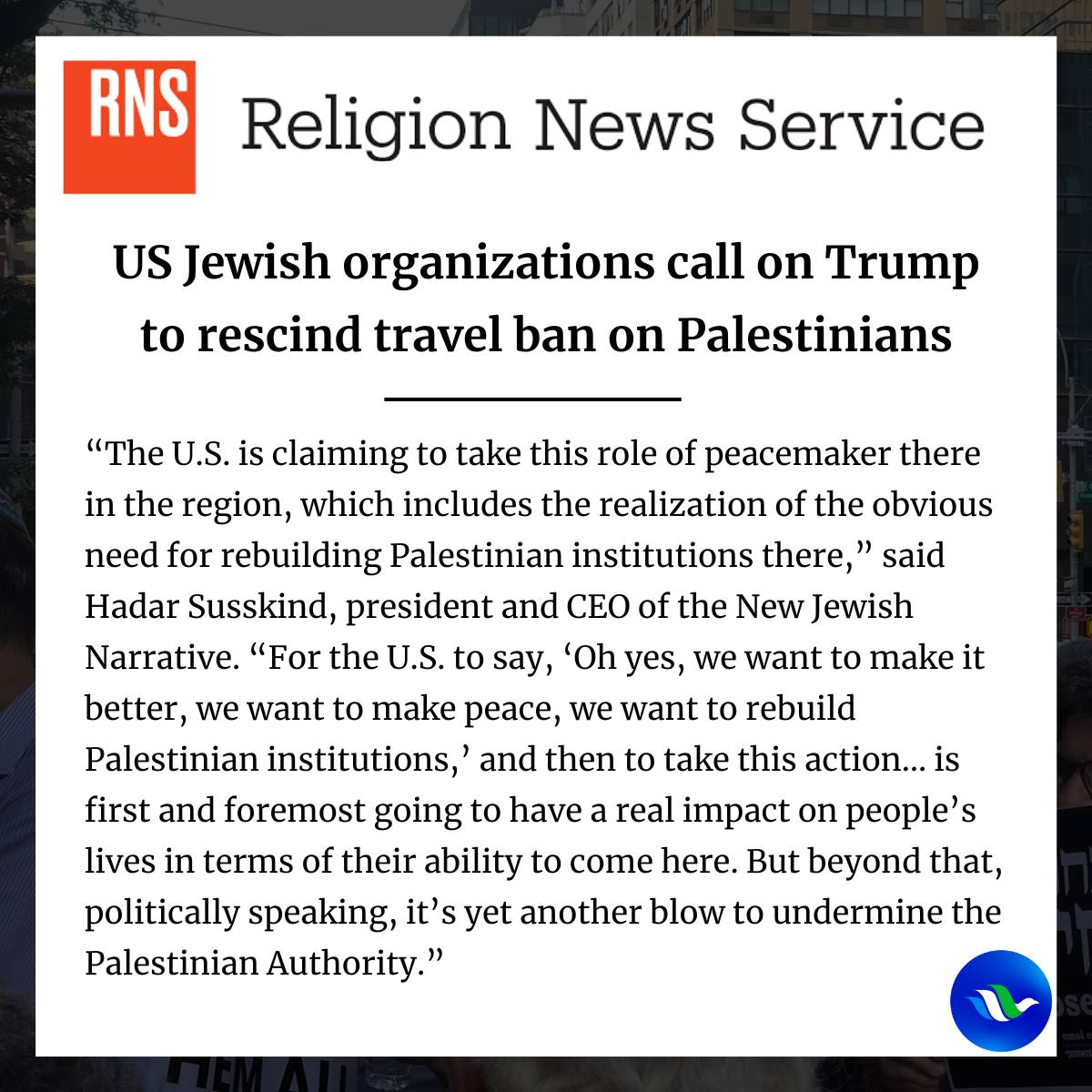
A coalition of eight Jewish organizations sent a letter this morning to President Donald Trump and Secretary of State Marco Rubio expressing alarm over the Trump administration’s expanded Travel Ban.
The letter sharply criticizes the decision to target Palestinians, noting that the Travel Ban further weakens the Palestinian Authority in a manner that will make stabilizing Gaza more difficult. Here the full text of the letter, signed by
New Jewish Narrative Bend the Arc: Jewish Action J Street National Council of Jewish Women New York Jewish Agenda (NYJA) Partners for Progressive Israel T’ruah: The Rabbinic Call for Human Rights The Workers Circle
„Wir betonen, dass Überlebende von Gewalt Gehör verdienen und traumatische Erfahrungen sorgfältiger und respektvoller Erinnerung bedürfen. Doch eine Erinnerung, die auf selektiver Empathie, politischer Ausblendung und affektiver Manipulation beruht, ist Propaganda. Eine verantwortungsvolle Erinnerungskultur muß die universelle menschliche Würde anerkennen, strukturelle und historische Zusammenhänge einbeziehen und jene analytischen Fähigkeiten fördern, die für ein wirkliches Verständnis und eine multidirektionale Erinnerungspolitik notwendig sind. Sie darf das Leid einer Gruppe nicht instrumentalisieren und gleichzeitig die Existenz und Menschlichkeit einer anderen vollständig negieren.“
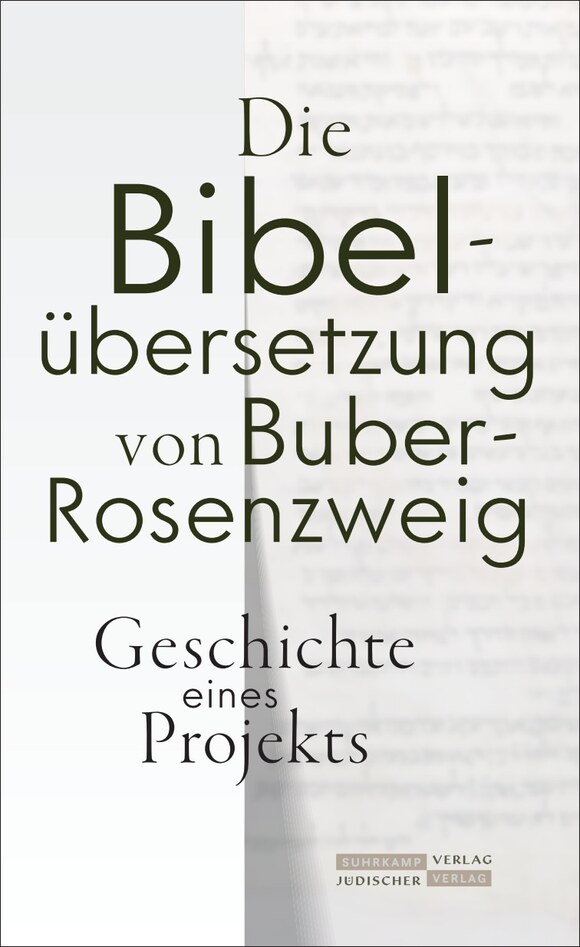
Vor 100 Jahren, im Frühling 1925, begannen Martin Buber und Franz Rosenzweig mit der Übersetzung der Hebräischen Bibel – ein mehrere Jahrzehnte dauerndes Projekt, das sie als „Verdeutschung der Schrift“ bezeichneten. Bereits im Dezember 1925 wurde der erste Band vorgelegt, der unter dem Titel „Das Buch Im Anfang“ die Übersetzung von Bereschit, dem 1. Buch Mose, enthielt. Nach Rosenzweigs Tod 1929 arbeitete Buber allein an der Verdeutschung weiter, die er 1961, vier Jahre vor seinem Tod, in Jerusalem beendete.
Christoph Kasten, Dr. Ansgar Martins und Dr. Inka Sauter gaben im Oktober 2025 den Band „Die Bibelübersetzung von Buber-Rosenzweig. Geschichte eines Projekts“ im Jüdischen Verlag im Suhrkamp Verlag heraus.
Im Gespräch mit den Herausgeber:innen bietet der Abend am 4. Dezember 2025 Gelegenheit, das Projekt der Verdeutschung und seine Rezeptionsgeschichte kennenzulernen. Denn an der Übersetzung entspann sich eine deutsch-jüdische Debatte, in der alle namhaften Autor:innen und Intellektuellen der Zeit von Siegfried Kracauer über Margarete Susman bis Walter Benjamin die großen Fragen der Moderne – Tradition, Politik und Zugehörigkeit – verhandelten.
An dem Abend werden zudem ausgewählte Passagen durch den Erzählkünstler Peter Gößwein vorgelesen und damit die ganz besondere Sprache der Buber-Rosenzweig-Übersetzung zu Gehör gebracht.
2. Dezember 2025 – 19.00-20.00 Uhr – Drin. Maya Rosenfeld (West-Jerusalem), Politikwissenschaftlerin und Anthropologin
The Anthropology of Occupation
Dienstagsgespräch / Tuesday Talk: Maya Rosenfeld and the Anthropology of Occupation
Unser nächster Gesprächsabend wird am Dienstag, dem 2. Dezember 2025, von 19 bis 20 Uhr auf Zoom stattfinden. Zu Gast haben wir diesmal Maya Rosenfeld, eine israelische Anthropologin, Soziologin und Autorin des Buches „Confronting the Occupation: Work, Education, and Political Activism of Palestinian Families in a Refugee Camp“. Sie forscht und lehrt derzeit an der Hebräischen Universität in Jerusalem.
Maya wird mit uns darüber sprechen, was es heißt, als Anthropologin zur palästinensischen Gesellschaft und Politik unter israelischer Besatzung zu arbeiten. Im Mittelpunkt sollen dabei UNWRA und Aspekte der humanitären Hilfe in den besetzten Gebieten stehen – sowohl vor als auch während des Gazakrieges. Der Gesprächsabend dauert wie immer eine Stunde und wird auf Englisch stattfinden.
Our next evening event will take place on Tuesday, 2 December 2025, from 7 to 8 p.m. on Zoom. This time, our guest will be Maya Rosenfeld, an Israeli anthropologist, sociologist, and author of the book “Confronting the Occupation: Work, Education, and Political Activism of Palestinian Families in a Refugee Camp”. She is currently working and teaching at the Hebrew University of Jerusalem. Maya will talk with us about what it means to work as an anthropologist on Palestinian society and politics under Israeli occupation. The focus will be on UNRWA and aspects of humanitarian aid in the occupied territories—both before and during the Gaza war. As always, the event will last one hour and will this time be held in English.
Zoom-Link für die Veranstaltung / Zoom link for the event:
6. Januar 2026 – Dr. Dr. Peter Ullrich (Berlin), Soziologe und Kulturwissenschaftler, Rosa-Luxemburg-Stiftung
3. Februar 2026 – Marina Klimchuk (Berlin), freie Journalistin
Vergangene Veranstaltungen / Previous events:
7. Oktober 2025 – Sally Azar (Jerusalem), Evangelisch-Lutherische Kirche in Jordanien und im Heiligen Land: Die Situation palästinensischer Christ*innen nach dem 7. Oktober 2023
4. November 2025 – Prof. Dr. Markus Dreßler (Leipzig), Religionswissenschaftler und Türkeiexperte: Türkische Perspektiven auf den Nahostkonflikt und die Antisemitismusdebatte
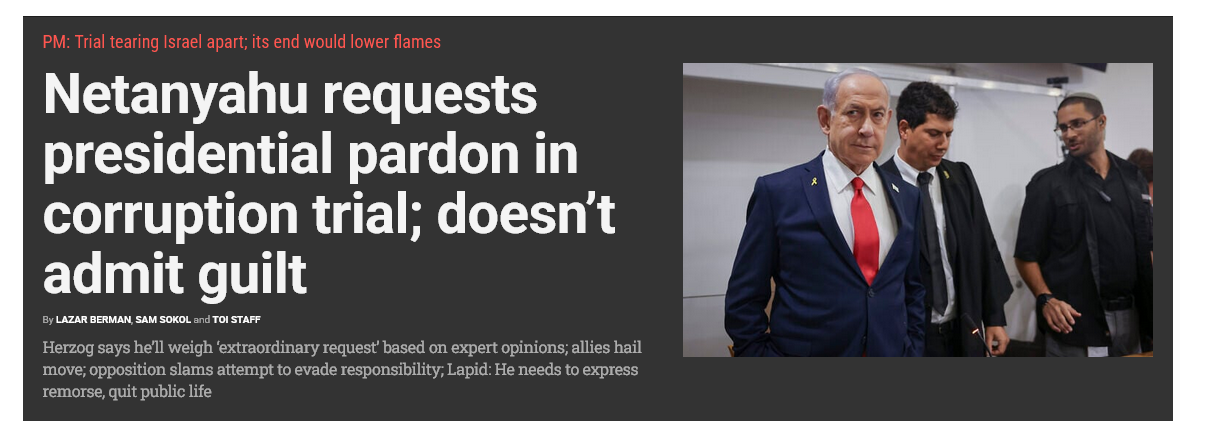
Wie kann man (~frau) um Begnadigung ersuchen, wenn keine Schuld vorliegt? Hier der Bericht der Times of Israel über die neue Pirouette des Ministerpräsidenten…
Ein spezieller Tag für die Geschichte des „Heiligen Landes“ – 1947 wurde an diesem Tag das ehedem britische Mandat völkerrechtlich verbindlich geteilt, in einen jüdisch-zionistischen und einen arabisch-palästinensischen Staat – und ein Corpus Seperatum Jerusalem (-Bethlehem) … Die Verantwortung der Völkergemeinschaft dieses Beschluß umzusetzen, die Geschichte eines großes Scheiterns…
Der Tag wurde dann später von den Vereinten Nationen zum Tag der Solidarität mit den Palästinenser:innen erklärt … und trotz des noch immer fehlenden und nötigen Selbstbestimmungsrechtes der palästinensischen Seite, sollte dies ein Tag der Solidarität mit allen Menschen zwischen Mitterlmeer und Jordan sein. mit beiden „Völkern“ und mit allen drei Religionen und denen, die sich keiner Religion verpflichtet fühlen.
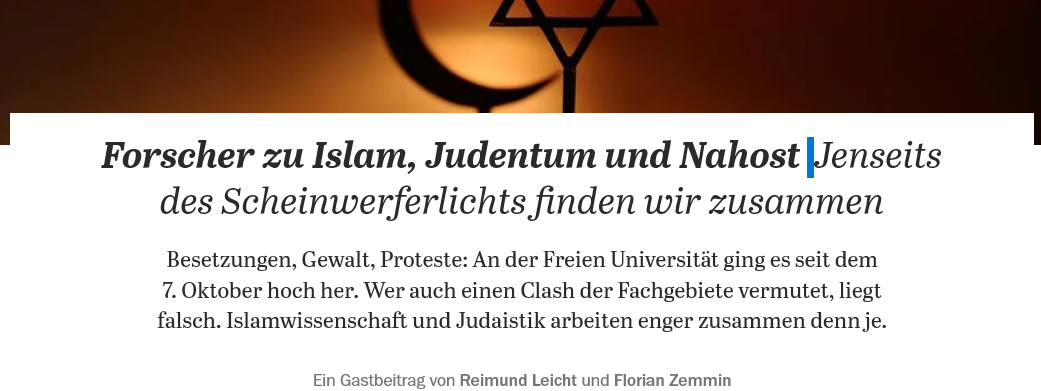
Zu diesem Tag paßt gut ein Gastbeitrag von Reimund Leicht (Judaist) und Florian Zemmin (Islamwisschaftler) von der Freien Universität Berlin:
Von Professot Zemmin erscheint übrigens in der neuen Ausgabe des diAk-Zeitschrift israel & palästina (3-2025: Zwischen den Stühlen) ein längerer Beitrag zu den Narrativen der Region