
Wie kann man (~frau) um Begnadigung ersuchen, wenn keine Schuld vorliegt? Hier der Bericht der Times of Israel über die neue Pirouette des Ministerpräsidenten…
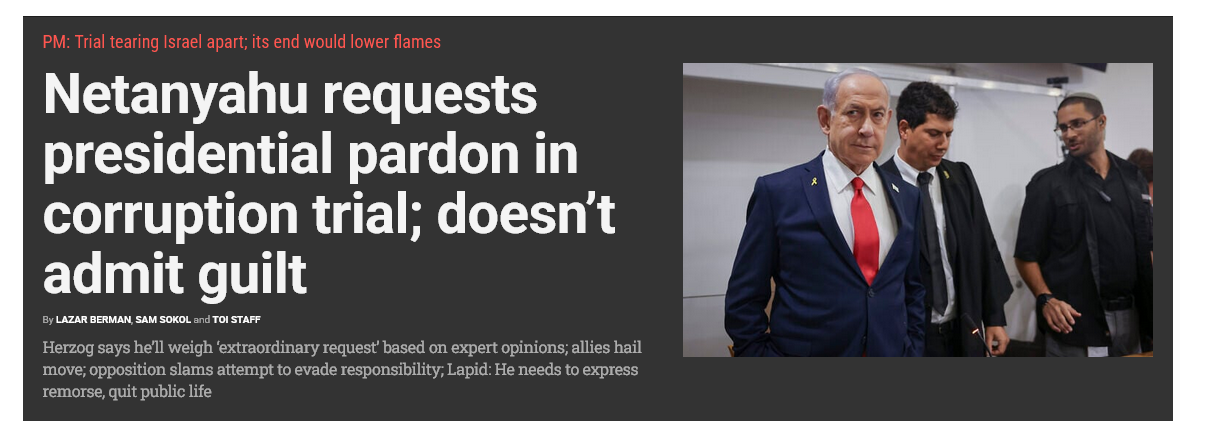
Wie kann man (~frau) um Begnadigung ersuchen, wenn keine Schuld vorliegt? Hier der Bericht der Times of Israel über die neue Pirouette des Ministerpräsidenten…
Ein spezieller Tag für die Geschichte des „Heiligen Landes“ – 1947 wurde an diesem Tag das ehedem britische Mandat völkerrechtlich verbindlich geteilt, in einen jüdisch-zionistischen und einen arabisch-palästinensischen Staat – und ein Corpus Seperatum Jerusalem (-Bethlehem) … Die Verantwortung der Völkergemeinschaft dieses Beschluß umzusetzen, die Geschichte eines großes Scheiterns…
Der Tag wurde dann später von den Vereinten Nationen zum Tag der Solidarität mit den Palästinenser:innen erklärt … und trotz des noch immer fehlenden und nötigen Selbstbestimmungsrechtes der palästinensischen Seite, sollte dies ein Tag der Solidarität mit allen Menschen zwischen Mitterlmeer und Jordan sein. mit beiden „Völkern“ und mit allen drei Religionen und denen, die sich keiner Religion verpflichtet fühlen.
Zu diesem Tag paßt gut ein Gastbeitrag von Reimund Leicht (Judaist) und Florian Zemmin (Islamwisschaftler) von der Freien Universität Berlin:
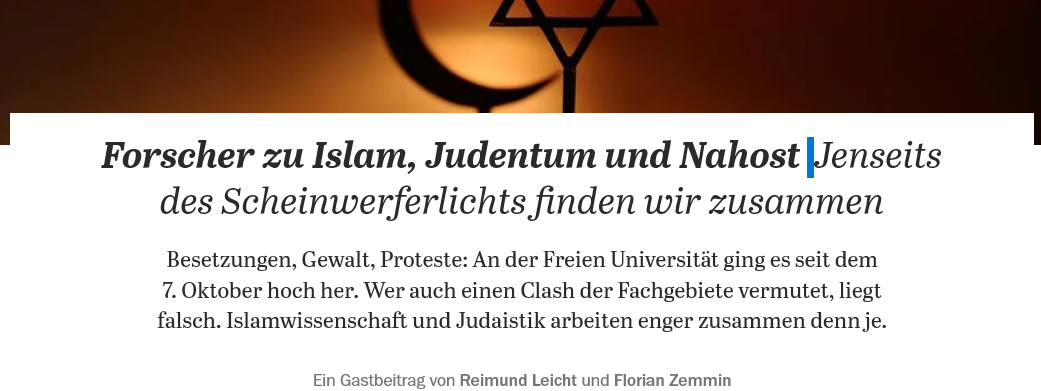
Von Professot Zemmin erscheint übrigens in der neuen Ausgabe des diAk-Zeitschrift israel & palästina (3-2025: Zwischen den Stühlen) ein längerer Beitrag zu den Narrativen der Region
Die israelische Wasserbehörde hat begonnen, entsalztes Wasser in das „galiläische Meer“ einzuspeisen, um dem weiteren Absinken des Wasserspiegels entgegen zu wirken. Ein historisches Experiment, dessen Ausgang auch für andere Teile der Welt von bedeutung sein kann.
Ein Bericht dazu in der Times of Israel (Weiteres dazu soll folgen)

10 Jahre Standing together – Großes Treffen in Haifa (jetzt …)

Livestream – oder später als Aufzeichnung / Mitschnitt

Frisch aus der Druckerei ist der Kalender 2026 eingetroffen – Thema Gaza – Ein Begleiter durch das Jahr 2026 Gaza – Promise, we will rebuild it – Bestellbar im Shop
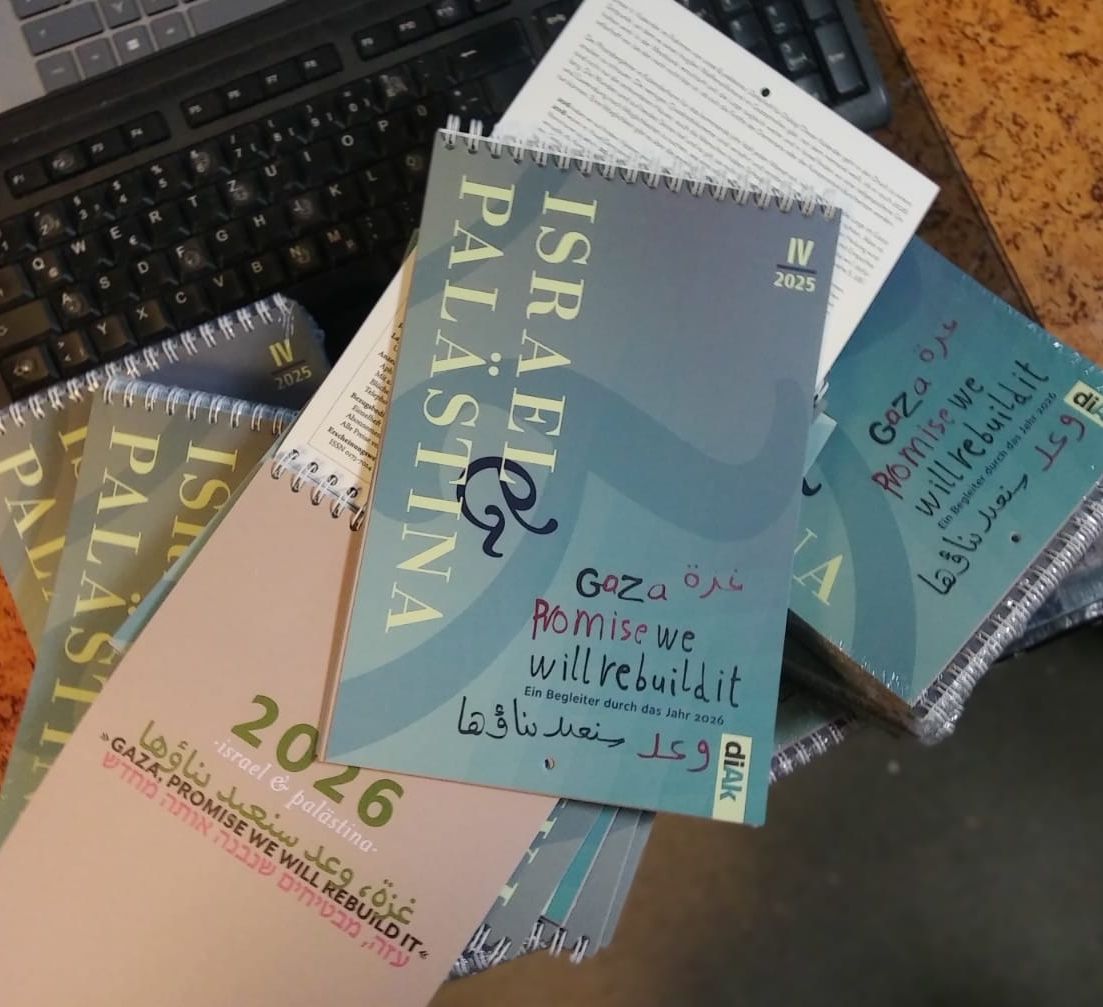
An die diAk-Mitglieder und die Abonnent:innen wird er mit dem Heft 3_2025 am 8, Dezember verschickt.
Wie geht es jüdischen Rückkehrer:innen in Deutschland und wie steht die Bevölkerung zu ihnen? Ist Antisemitismus Vergangenheit?
NDR – Ein Beitrag aus dem Jahr 1959 – Leben in der Nachkriegsgesellschaft – NDR Retro

Besatzung und Enteignung macht vor nichts halt
Nachrichten zur antiken Stätte Sebastia (bei Nablus)
| November 24, 2025 |
| Aus dem Mailing vom Emek Shaveh vom 24. November 2025 In recent years, we have been closely monitoring Israel’s increasingly aggressive actions at archaeological sites across the West Bank – steps that violate international law, dramatically reshape realities on the ground and are tantamount to de facto annexation. One site we follow with particular concern is Sebastia, one of the most important archaeological sites in the West Bank and a candidate for inscription on UNESCO’s World Heritage List for the State of Palestine. Last week, the Israeli Civil Administration announced the expropriation of approximately 1,800 dunams (some 550 privately owned plots) belonging to residents of Sebastia and the neighbouring town of Burqa. Needless to say, the settlers’ plans have nothing to do with conserving the site – if that were the case, there would be no issue at all, as the entire archaeological mound lies in Area C. Despite the administrative division between Areas B and C, the town and the site form a single historical landscape. The town itself contains impressive antiquities and together, the site and the town, constitute the rich heritage of Sebastia. The settlers’ plan to separate the town from the site includes paving a new access road entirely within Area C, through which Israelis would reach the site; building a visitors’ center; fencing the site; and charging entry fees – similar to what has been done at Herodium. These steps would effectively sever the site from the town and from the community to which it has belonged for generations. Following the expropriation announcement, an emergency meeting was held yesterday in Sebastia. Residents reported that the expropriation will severely restrict access to agricultural lands and could lead to the loss of roughly 3,000 olive trees, some of them centuries old. This development comes on top of a sequence of measures that began in March 2023 with the government’s plan for the site, followed by the military seizure of the top of the mound – against which both residents and we submitted objections – and, of course, new excavations by the Staff Officer for Archaeology. All of these steps serve a clear objective: severing the community from the site and from its heritage. The emergency meeting on Saturday was attended by the Palestinian Minister of Tourism and Antiquities, the Governor of Nablus, and the Mayor of Sebastia. Participants discussed ways to oppose the expropriation and what actions might be taken to halt it. Our Executive Director, Alon Arad, also joined the meeting and presented our expertise and understanding of the situation, as well as potential avenues for action. Residents described increasing difficulties accessing their land – difficulties that resulted in nearly 60% of the olive trees not being harvested this year, an estimated loss of around 300 tons of olives. They also reported a dramatic decline in tourism, on which many families rely for their livelihood, due to movement restrictions and army harassment, including the use of tear gas and stun grenades near visitors, and demands to shut down local businesses around the site. The expropriation marks a dramatic escalation, and we are examining how we can effectively support the residents of Sebastia in resisting this plan. We will continue to update as developments unfold. For more information see the following press release: |
Emek Shaveh (Pressemitteilung vom 19. November 2025)
Ergänzung am 26. November 2025: Beitrag von David Neuhaus SJ auf Independent Catholic News, der mit diesen Zeilen endet:
„Religious leaders and people of faith and goodwill must urgently speak out to stop this action. If we remain silent in front of such an egregious decision, then more and more of the Palestinian heritage will be seized. We cannot allow the religious and cultural heritage of the Palestinians to be confiscated, violated and erased using religious texts and archaeological research. The entirety of the land we call holy is the home of Christians, Muslims, and Jews whose common heritage can be identified in the layers of history that stretch back to Biblical times. This heritage cannot be treated as the exclusive property of one group. Rather, in truly honouring this heritage, we might be able to open a future horizon of equality, justice and peace for all who treasure this heritage.“
UNESCO report: https://whc.unesco.org/en/tentativelists/5718/
Allianz für Frieden im Nahen Osten… – Zwölf Organisationen stellen sich vor
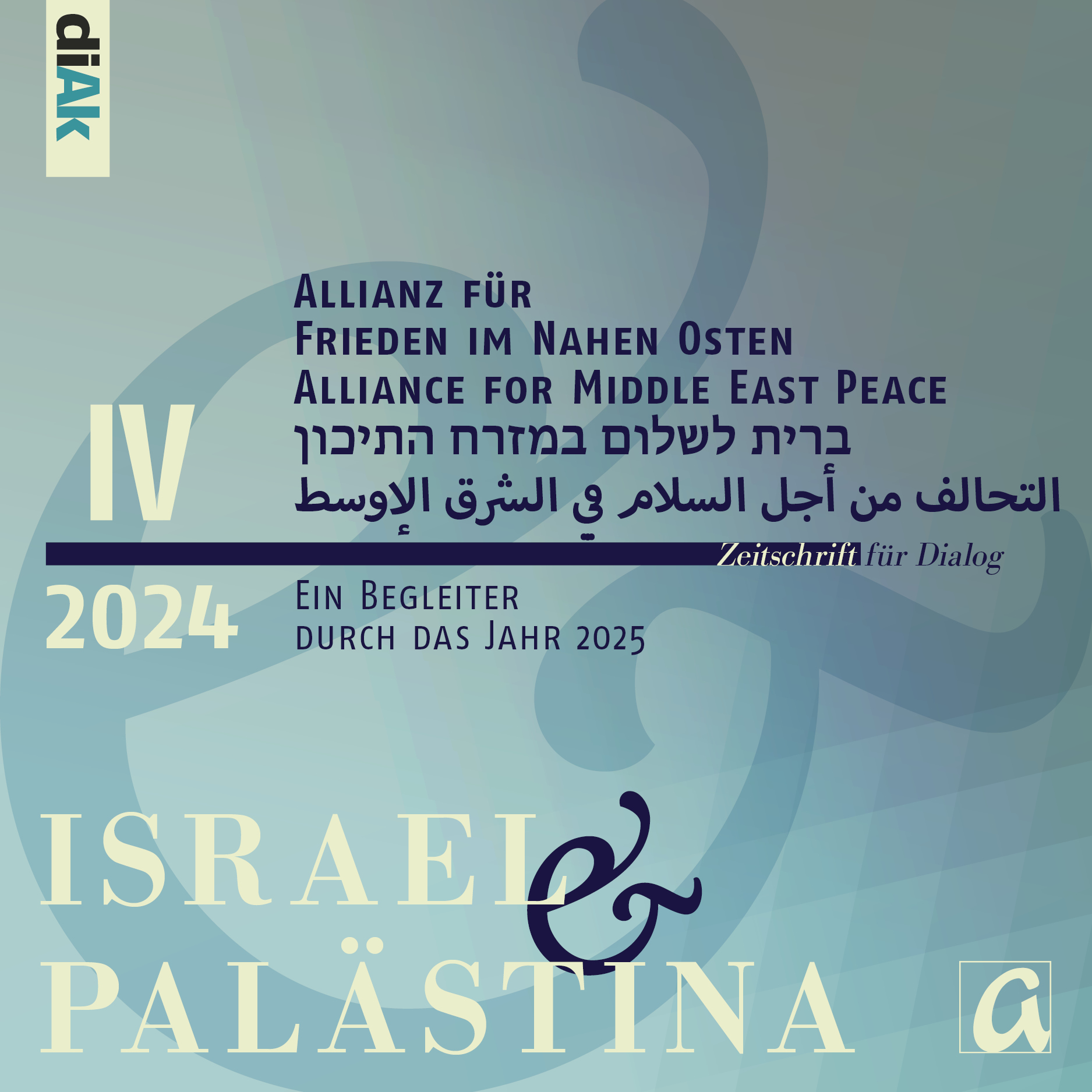
Ein Begleiter durch das Jahr 2025 – Im Oktober ist es die das Projekt Hand in Hand… genau das Hand in Hand braucht es jetzt, wenn der Nahe Osten, wenn Israel und Palästina /Palästina und Israel eine andere Zukunft haben soll, bei diese Kinder von heute nicht wieder als Soldat:innen gegeneinander ziehen …

israel & palästina – Zeitschrift für Dialog | Ausgabe 4-2024
Givat Haviva (GH) is one of Israel’s largest and oldest centers for Jewish-Arab encounters.
Founded in 1949 and named after resistance fighter Haviva Reik, the organization has worked for 75 years to promote a peaceful, democraticshared society between Arab and Jewish citizens of Israeli, grounded in equality.
The GH campus houses the Jewish-Arab Center for Peace (JACP), an arts and language center, archives, a research institute, an international school, and other facilities. Each year, over 30,000 people visit the campus to take part in educational and community-building programs.
(Donation Link)
***
Es war das zehnte Mal, daß im Rahmen von israel & palästina | Zeitschrift für Dialog ein Photobegleiter in Kalenderform für das kommende Jahr erschienen ist:
Allianz für Frieden im Nahen Osten – Ein Begleiter durch das Jahr 2025
Erschienen in Zusammenarbeit mit allmep.org
Kalender 2025
Zum Antisemitismus – Ein Beitrag der Panorama-Redaktion in der ARD-Mediathek
„Die Zahl antisemitischer Straftaten in Deutschland steigt, Jud:innen berichten von offener Feindseligkeit. Doch „Antisemitismus” kann auch ein schwerer Vorwurf sein, wenn er mißbraucht wird – etwa um Kritik abzuwehren“.
Dis Stunde der Wahrheit: Glaube in Zeiten des Völkermords
Die Stunde der Wahrheit: Glaube in Zeiten des Völkermords Wir blicken auf den Tag, an dem wir frei in unserem Land leben werden, zusammen mit allen Bewohnern der Erde, in wahrem Frieden und Versöhnung – gegründet auf Gerechtigkeit und Gleichheit für alle Geschöpfe Gottes, wo „Gnade und Wahrheit sich begegnen und Gerechtigkeit und Friede sich küssen“ (Psalm 85,10).
Hier die deutsche Übersetzung des Textes, der versucht aus palästinensisch-christlicher Sicht eine konstruktive Perspektive zu entwickeln, ein Angebot, welches das Gespräch, auch das nicht einfache Gespräch, lohnt.
