The Holocaust will forever remain a black hole in human history. But the moral credit card it gave Israel has expired. From now on, Israel will be measured like any other state: by its actions in the present.
This is a painful realization for Israel. Perhaps the most painful since its founding. For the first time, it is asked for accountability and moral reckoning for its own deeds and wrongs. And yet this moment holds new possibility. The crimes of Hamas in October 2023 do not justify, let alone balance, Israel’s crimes since. Though it must repeatedly said: Jews never committed or attacked Germany, and the Final Solution had no justification, none whatsoever. Yet the post-2023 Israel must become Gaza’s Germany, Palestine’s Germany. Having destroyed, Israel must rebuild. Having denied, it must ensure an entire generation of Palestinian life in peace and hope.Since there is one more lesson from “our holocaust”. Not only the victims need healing and repairs. So does the criminal victimizer. This time it is us the Israelis.
Open letter from archaeologists, antiquities researchers, and museum curators against cultural destruction in Gaza and the West Bank
In recent days we have learnt of the total destruction of a building housing the archaeological store-rooms of the École Biblique in Gaza, an act that necessitated the urgent and apparently partial relocation of tens of thousands of items, causing damage whose extent is still unknown. This is a continuation of the policy of destruction and annihilation in the Gaza Strip that has also targeted heritage sites (according to the latest reports, about 110 historical buildings, archaeological sites, and other cultural properties have been severely damaged or completely destroyed), mostly with no known connection to military needs.
Such actions, which contravene the rules of warfare as set forth in international conventions, add to the ongoing Israeli violation of international law in the occupied territories (Judea and Samaria), and to the constraint on the activities of Palestinian archaeological authorities in areas under the Palestinian Authority’s control (Areas A and B). These circumstances have resulted in the neglect of many cultural properties, their appropriation by nationalist elements, and their partial or complete destruction.
In view of the imminent planned destruction of Gaza city and the damage to heritage sites of local and global significance throughout the Gaza Strip, which continues decades of destruction and neglect of Palestinian cultural heritage within the State of Israel and the West Bank, we, professionals in the fields of heritage, call upon the Government of Israel and the military to:
Immediately stop the demolition of the Gaza Strip, the destruction of its cultural treasures, and the attempt to cleanse it of any presence other than Jewish.
Resume adherence to international law, particularly those conventions that dictate the proper treatment of cultural heritage during armed conflicts and occupation —treaties that have been ratified by the State of Israel.
End the rule of settler gangs and the ongoing annexation of heritage sites in the West Bank and enable Palestinian archaeological enforcement in areas under the Palestinian Authority’s control.
The heritage of Palestine/the Land of Israel belongs to all the natives of the land, as well as to all who have made it their home and have a stake in its future. Muslims, Christians, and Jews have lived in this land and sustained it for centuries and millennia: It is our duty to maintain the heritage of the land in all its diversity, for the sake of our future and that of our descendants. Singed
Prof. Rafi Greenberg Dr Tawfiq Da’adli Dr Dotan Halevy Dr Chemi Shiff Alon Arad
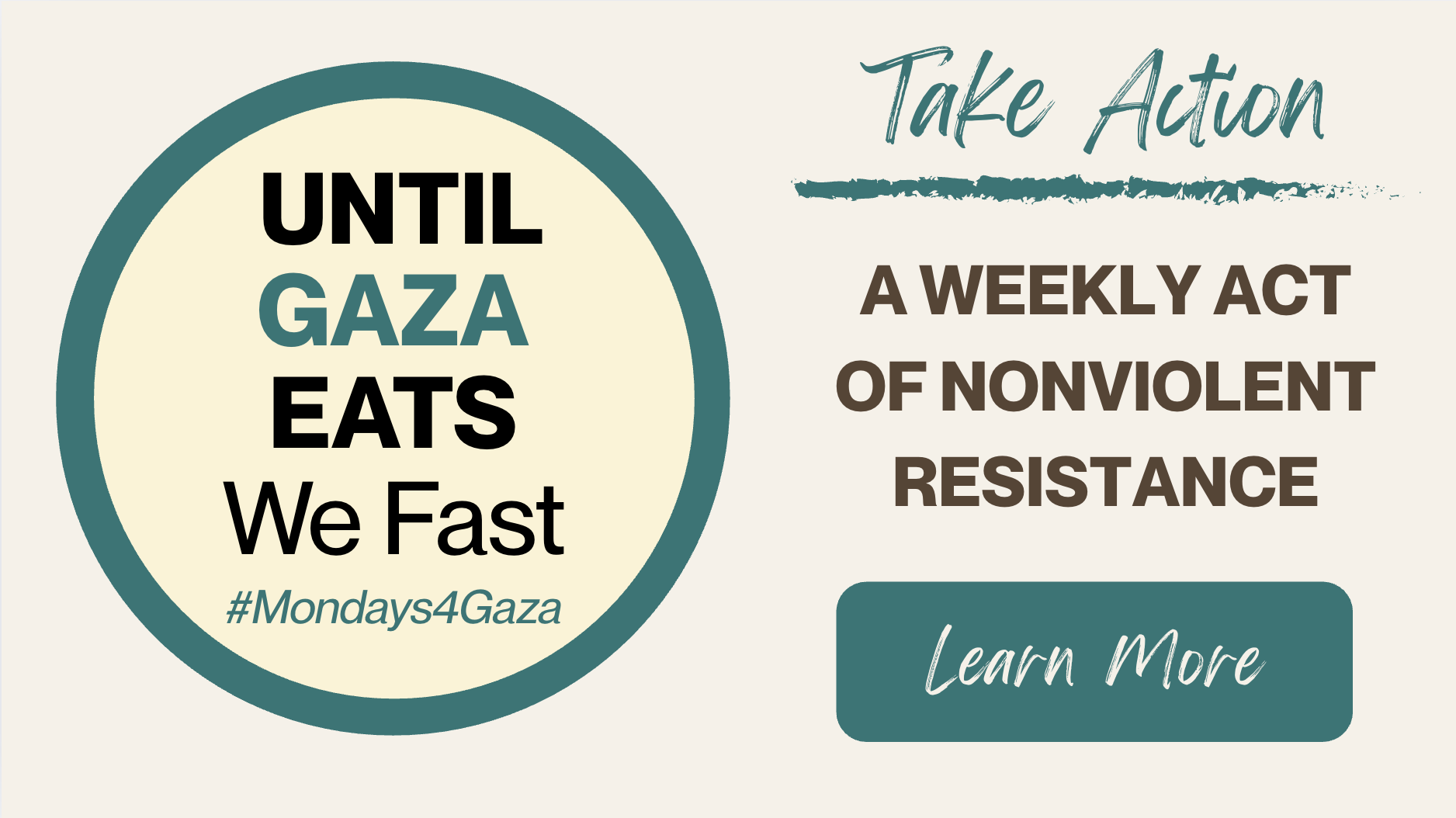
Every Monday, people across the world are coming together in a simple, powerful act of solidarity: refusing food and refusing to look away from Gaza. For 85 days, Combatants for Peace activist Mai Shahin refused food. By her side, Israeli ally David Ginati went on hunger strike for 55 days. Together, from the heart of the West Bank at Satyam, they put their own bodies on the line in solidarity with the people of Gaza who are being forcibly starved. What began with two hunger strikers has now grown into a global action: #Mondays4Gaza. Every week, Palestinians, Israelis, and internationals fast, gather, and speak out together — refusing silence, refusing despair, and insisting on life. We invite you to join us: to fast, to bear witness, and to be part of this widening circle of courage and care. Co-sponsored by CfP and AFCFP, some in our community are already taking part. Others may be hearing about this for the first time. However you arrive, you are welcome. However you choose to participate, you are needed.
The World Week for Peace in Palestine and Israel is an annual WCC event held during the third week of September. This year from Saturday 20 to Friday 26 September 2025. The week aims to encourage people of faith to pray for, and work towards, an end to Israeli oppression and allowing both Palestinians and Israelis to live in peace.
Israel und die Palästinenser (Zweiteiler, Ausstrahlung 16. September 2025, verfügbar bis zum 14. März 2026)
Von George W. Bush über Barack Obama bis hin zu Donald Trump: Seit über 20 Jahren sitzen US-Regierungen am Tisch der israelisch-palästinensischen Friedensgespräche – erfolglos. Der Doku-Zweiteiler blickt zurück: Wie konnte die Hamas Schritt für Schritt an Einfluß gewinnen, bis zu den Anschlägen vom 7. Oktober 2023? Minister:innen, Diplomat:innen und Militärs aus allen Lagern berichten über 20 Jahre Konflikte im Nahen Osten, von gescheiterten Friedensplänen, verhärteten Fronten – und den Folgen bis heute.
Im Jahr 2003 überraschte der israelische Ministerpräsident Ariel Scharon die internationale Gemeinschaft mit seiner Entscheidung, die israelische Armee und die Siedler aus dem Gazastreifen abzuziehen. Doch schon der Abzug selbst verlief dramatisch und mündete im unerwarteten Wahlsieg der Hamas, die daraufhin die Kontrolle über den Gazastreifen übernahm. Die Anführer beider Lager und ihre wichtigsten Berater beschreiben die diplomatischen Spannungen im Vorfeld von Scharons Abzugsplan sowie ihre Bemühungen zur Schadensbegrenzung. Im Jahr 2009 stritten sich die gerade ins Amt gekommenen Staatsoberhäupter Benjamin Netanjahu und Barack Obama auch über den Umgang mit dem Nahostkonflikt. Ehemalige israelische, amerikanische und palästinensische Regierungsvertreter erzählen, wie Obama Netanjahu unter Druck setzte, um der Besiedlung palästinensischer Gebiete Einhalt zu gebieten. Die damalige US-Außenministerin Hillary Clinton schildert, wie es ihr gelang, Netanjahu und den Palästinenserführer Mahmud Abbas an den Verhandlungstisch zu bringen, um ein nachhaltiges Friedensabkommen zu erwirken. Der Gipfel scheiterte jedoch kläglich, die beiden trafen sich danach nie wieder. Hamas-Führer und israelische Staatsbedienstete berichten, wie Netanjahu einen bemerkenswerten Vertrag mit der Hamas aushandelte: den Austausch einer israelischen Geisel gegen mehr als 1.000 palästinensische Gefangene – darunter der Mann, der später den Terroranschlag vom 7. Oktober 2023 planen sollte. Neben den ehemaligen US-Außenministerinnen Condoleezza Rice und Hillary Clinton kommen der ehemalige israelische Ministerpräsident Ehud Olmert, Ariel Scharons engster Berater Dov Weissglas sowie hochrangige Palästinenservertreter, darunter Präsident Abbas‘ Bürochef Rafik al-Husseini, zu Wort. Befragt wurden zudem die Hamas-Chefs Khaled Mashal und Ismail Haniyeh, wobei letzterer nur einen Monat nach dem Gespräch bei einem israelischen Anschlag ums Leben kam.
From the Preface by the OECD In 2021, the OECD published its first report monitoring regional integration in the Euro-Mediterranean region. This second edition of Regional Integration in the Union for the Mediterranean assesses progress made since 2021 – a period marked by the impacts of the COVID-19 pandemic, successive economic shocks, ongoing conflicts in the Middle East, and an increasingly complex geopolitical context.In this challenging environment, our report highlights the opportunities that economic integration offers for countries in the region to achieve stability, peace and prosperity
Die Spannungen zwischen ultraorthodoxen und säkularen Juden sind für drei Viertel (73 Prozent) der jüdischen Israelis einer der schwerwiegendsten Konflikte in der Gesellschaft. So steht es im jährlichen Religionsstaatsindex des Forschungsinstituts Hiddusch, der am 12. Sptember 2025 veröffentlicht wurde. Hier ein Bericht des ORF dazu: